VIX Hits 28 as Iran Attacks US Bases: Is a Market Bottom Near?
Social sentiment is split between panic-selling and bottom-fishing as the geopolitical shockwaves hit every asset class
Ticker Ratings
Buckle up. The S&P 500 closed at 7,175 on November 19, down 5.1% from its level just six days prior, and the market is not done digesting what is happening in the Gulf. Iran attacked US bases in Kuwait and struck Bahrain's industrial facilities. The US responded with airstrikes on a missile launch site on Qeshm Island. Two tankers near Oman got caught in the crossfire. The Strait of Hormuz, the chokepoint for roughly 20% of global oil trade, is now a live warzone. This is not a drill.
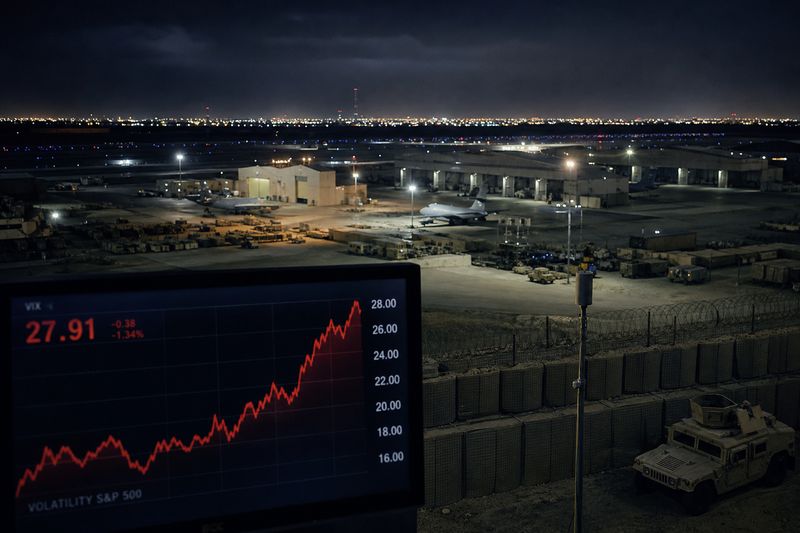
The fear gauge is screaming. The VIX spiked to 28.44, up nearly 16% in a single session, capping a week where it climbed from a relatively calm 19.3 to genuinely uncomfortable territory. For context, the long-term average sits around 20. We are now well above that. On YouTube, Investor's Business Daily's latest video is making the rounds among traders who are mostly in cash, warning that a single big bounce day is a trap, not a signal. The key phrase: wait for a follow-through day on day four or later. Right now, nobody is calling a confirmed bottom.
The macro backdrop is a complete mess. Congress is struggling to avoid a government shutdown while lawmakers fight over Iran war funding. Trump told Xi and Putin in a trilateral summit that the US and China can help end the Ukraine war, and China and Russia released a joint peace declaration that drew eerie comparisons to post-World War II carve-ups. Meanwhile, Trump said the US will see what happens with Iran after January 1, which is exactly the kind of non-answer that markets hate. The 10-year Treasury yield slipped to 5.04%, a classic flight-to-safety trade as investors rotate out of equities and into bonds.
TheChartGuys on YouTube flagged that the current price action most closely resembles the tariff tantrum pullback of spring 2025, a 26% drop over two months. That is either comforting or terrifying depending on your time horizon. The key tell to watch: a weekly bounce followed by either a higher low (bullish) or a lower low (bearish). The Nasdaq is already down over 10% on the week and flirting with bear market territory from its October record, per Bloomberg Podcasts. Friday's session was made worse by the worst options market liquidity in a decade.
The Dow closed at 48,147 on November 20, its fifth consecutive down day, shedding over 3,400 points in that stretch. Morningstar's Christine Benz is out this week noting that a 60/40 portfolio from five years ago is now sitting at roughly 75% US equities, meaning a lot of retail investors are carrying far more risk than they think heading into this chaos. That rebalancing conversation just got a lot more urgent.
When geopolitics moves this fast and the VIX moves this hard, the market does not reward heroism. It rewards patience, and right now patience looks a lot like sitting on your hands until the missiles stop flying.