S&P 500 Down 5% in a Week: Is 7000 the Next Stop?
Iran, Nvidia chaos, and a wobbling Anthropic IPO just handed markets their worst week in years
Ticker Ratings
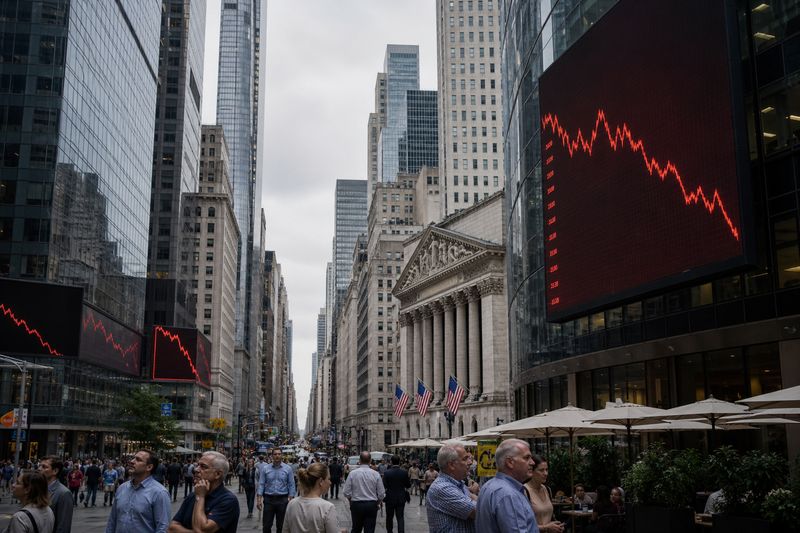
Let's just say it plainly: this week was rough. The S&P 500 fell from 7,561 on November 13 to 7,175 by November 19, a loss of roughly 5.1% in five sessions. The Dow cracked below 49,100. The Nasdaq shed 5% across the week. And the VIX, everyone's favorite fear gauge, went from a drowsy 19 to a sweaty 28.44, its highest print in months. If markets were a person, they'd be stress-eating in a parking lot right now.
The proximate cause is a geopolitical pile-up that reads like a Tom Clancy novel someone left in the microwave too long. The US struck an Iranian missile site on Qeshm Island. Iran fired back at US bases in Kuwait and Bahrain. Congress is simultaneously trying to avoid a government shutdown while half the chamber is focused on the Iran situation. Meanwhile, Trump, Xi, and Putin held a trilateral summit and released a joint peace declaration that Wall Street apparently did not find reassuring. When the VIX spikes 18.7% in a single day (November 16), you know the algos read the headlines too.
Underneath the geopolitics, there are real structural cracks. Nvidia is down 44% from its October highs, shedding over $800 billion in market cap in seven sessions, with an SEC accounting probe, a California AG investigation, and Jensen Huang scheduled to testify before Congress on December 1st. The Anthropic IPO, which was supposed to be a celebratory AI moment, ended up dragging the Nasdaq into the red on its opening day and fell 10% on its second session. As a vibe, that's not great. CNBC's closing bell panel noted the S&P briefly touched 6,926 intraday, with the VIX spiking above 36 at the lows, suggesting some seriously indiscriminate selling.
The bull case, such as it is, comes from BTIG's Jonathan Krinsky and Ed Yardeni. Krinsky has a downside target of 7,000 on the S&P but sees conditions ripe for a tactical bounce given seven straight down days and extreme oversold readings. Yardeni argues this is a correction within a secular bull market, not a bear market, pointing to strong earnings and no recession signals. The bear case: 2027-2028 earnings estimates still look too high, valuation compression is real (S&P at 17x, SOX at 14x), and nobody is calling a durable bottom yet with Apple barely off its highs. Historically, market bottoms don't form until Apple pulls back a median of 23%. It's currently down about 3%.
One actually interesting signal in all the noise: 10-year Treasury yields fell from 5.15% to 5.04% across the week as investors fled to safety. That's a meaningful flight-to-quality move, and it suggests bond markets are pricing in more pain for equities before this settles. The question now is whether 7,000 on the S&P is a magnet or a trampoline. Given that Congress is still arguing and Iranian drones are still flying, maybe don't bet on the trampoline just yet.