Bitcoin's Debasement Trade: Why BTC Is the New Gold
As Treasury yields spike and the 60/40 playbook cracks, capital is rotating into hard assets with conviction
Ticker Ratings
Everyone already covered Bitcoin's 22% weekly surge (guilty, we did too). But the angle that's flying under the radar is why it's happening, and what it says about where smart money thinks we're headed. Spoiler: it has less to do with crypto Twitter hype and a lot more to do with the bond market quietly having a meltdown.
According to Bloomberg's Closing Bell coverage, gold and Bitcoin rose in tandem last week as capital rotated out of bonds and into hard assets. The 30-year Treasury yield hit 5.2%, which sounds great until you realize bond prices move inversely to yields, and long-duration holders just watched their portfolios crater again. When your "safe" asset is the thing losing money, you start eyeing alternatives with very different eyes.
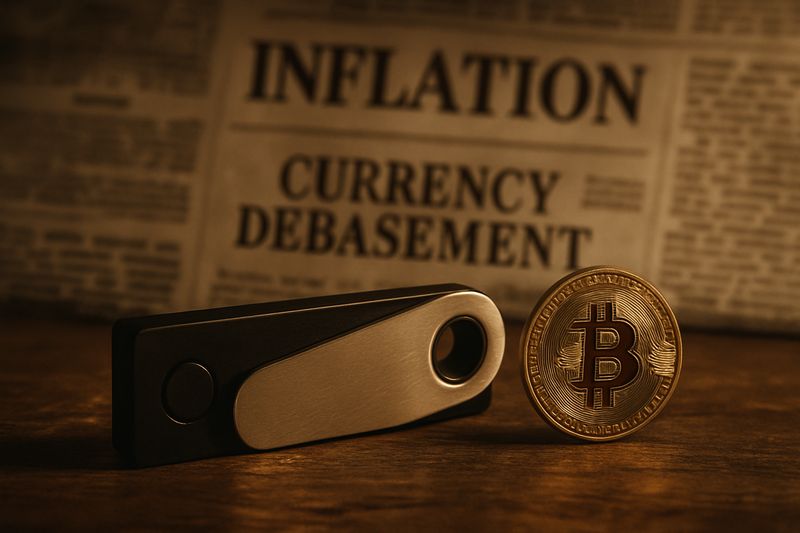
This is the debasement trade in its purest form. The theory goes: governments are issuing debt faster than markets can absorb it, Treasury Secretary Scott Bessent is floating an "Operation Twist" to buy back long-dated bonds by issuing T-bills (analysts described it as underwhelming, which is Wall Street for "nice try"), and nobody really believes rate cuts are coming soon after strong business activity data pushed expectations further out. In that environment, Bitcoin isn't a speculative casino chip. It's a monetary policy escape hatch.
The asset class distinctions that used to matter are blurring fast. Consider the scorecard from last week alone:
- Bitcoin up roughly 22% on the week, its best performance since March 2023
- Gold rising alongside it, confirming the hard-asset rotation thesis
- 30-year yields at 5.2%, the kind of level that makes pension funds weep quietly
- US-Canada trade talks collapsing over, of all things, a Ronald Reagan ad, adding geopolitical noise to an already twitchy macro picture
The bear case here is real: Bitcoin at $77,000 after a 22% weekly rip is not a calm entry point. Momentum that violent tends to mean-revert, and a resolution to the US-Canada trade drama could pull some of the fear premium back out of hard assets. Plus, if Bessent's debt buyback plan gets scaled up and actually works, long-bond yields could stabilize and take the debasement narrative down a notch.
But the bull case is that this isn't a short squeeze story anymore. It's a structural shift in how investors think about the risk-free rate. When the "risk-free" asset yields 5.2% and still feels risky, that's the kind of identity crisis that sends money looking for exits, and Bitcoin is holding the door open.
Monetary policy broke the bond market's reputation as a safe haven, and Bitcoin is simply cashing the check.
BullApe's AI grades every pick against the S&P 500 - wins and misses published. See the track record →