Bill Dudley Calls AI Stock Bubble: Shiller P/E at 41, Bursts by 2027
Former New York Fed President draws direct parallels to the 1999 dot-com peak as Anthropic targets a $2T IPO and credit card delinquencies hit 15-year highs
Ticker Ratings
Former New York Federal Reserve President Bill Dudley just said the quiet part loud: the U.S. equity market is in a bubble, it's being fueled by AI hype, and he expects it to burst before the end of 2027. He's not the guy who cries wolf. So when he draws a straight line from railroad mania to the dot-com implosion to today, it's worth paying attention.
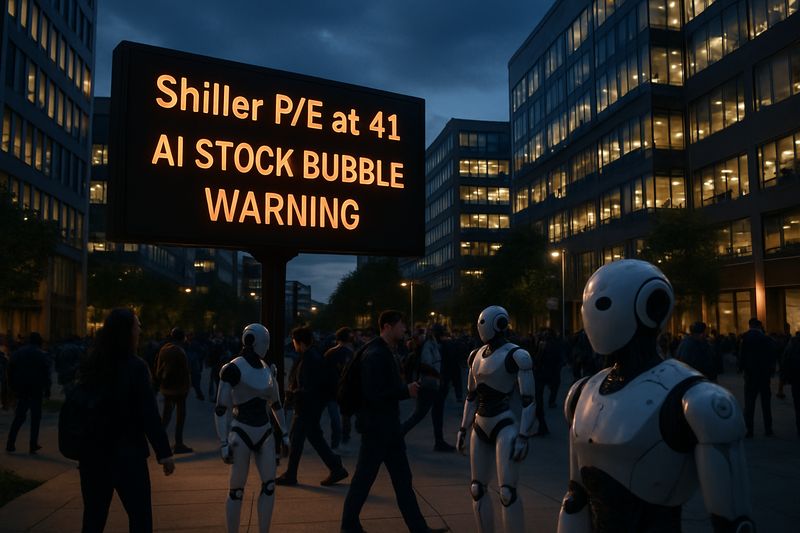
The core of his argument sits in one number: the Shiller cyclically adjusted P/E ratio is currently sitting at 41, dangerously close to the all-time high of 44 reached in 1999 right before the Nasdaq shed 78% of its value. Bloomberg Daybreak covered Dudley's warning in detail, and the framing is striking because it's not just vibes. The ratio compares current prices to 10 years of average real earnings, smoothing out one-year noise. At 41, you are paying a lot for the promise of what comes next.
What makes this cycle feel different, and therefore potentially more dangerous, is the degree to which the narrative is self-reinforcing. Anthropic is reportedly eyeing an IPO that would value it at up to $2 trillion, roughly 30 times annualized revenue. For context, Microsoft trades around 10x revenue. Broadcom is reportedly lining up $100 billion in debt to fund an AI infrastructure megadeal. The money being thrown at AI right now makes the early 2000s telecom buildout look restrained.
Meanwhile, the macro backdrop is quietly flashing red in ways the bull case ignores. Credit card delinquency rates have hit 13% at 90 days past due, the highest in 15 years. Walmart just posted its weakest U.S. comparable sales growth in six years at just 2.6%, with its own CFO acknowledging consumers are stressed and making tradeoffs. The Fed Beige Book is painting a weaker consumer picture than corporate earnings reports suggest, which is a divergence that historically doesn't end quietly.
The bull counterargument is that the Treasury put is now in play, with Secretary Bessent signaling expanded debt buybacks and Fundstrat's Mark Newton calling the intervention a potential game changer that could push stocks to new highs within days. Gold and Bitcoin have already surged in response. The reflationary trade is real.
But Dudley's warning and a Treasury put are not mutually exclusive. Bubbles can keep inflating long after the first smart person calls them. The question is not whether Dudley is right. It's whether 2025 is 1998 or 1999, and nobody actually knows the answer until it's too late.