Nasdaq Up 1.19% While War Rages: Is the Market Broken?
Equities are rallying, VIX is yawning, and the biggest war in the Middle East in decades is apparently just background noise
Ticker Ratings
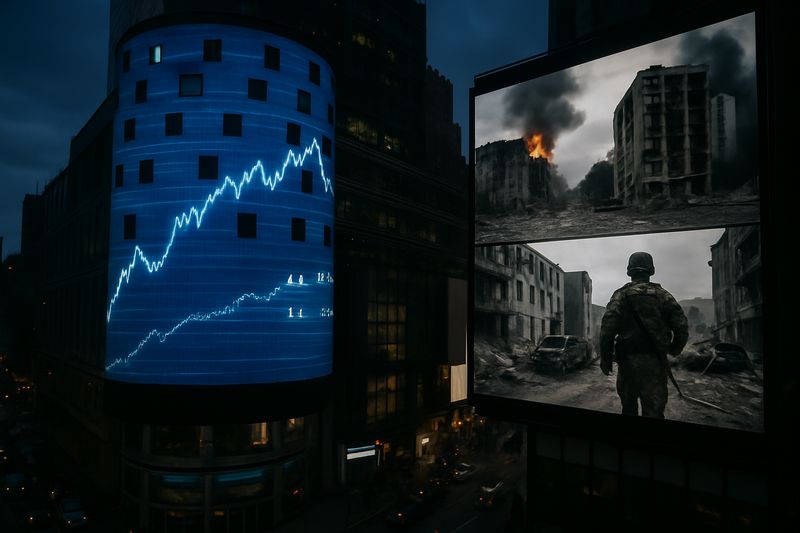
Let's just say the quiet part out loud: the Nasdaq gained 1.19% on Friday while the news cycle was dominated by U.S. sailors adjusting to active combat aboard the USS George Washington, OPEC+ shelving capacity reviews because of the Iran war, and Qatar trying to broker peace between two countries actively shooting at each other. The S&P 500 closed the week at 7,722, up 0.73% on the day. The Dow added a polite 0.49%. Markets are, apparently, fine.
The VIX sitting at 16.39 is the most confusing number in finance right now. That is not a war-is-happening number. That is a Tuesday-in-August number. For context, the 10-year Treasury did dip slightly to 5.24% after a stretch of consecutive climbs, which suggests some mild safe-haven rotation is happening under the surface, but nothing close to a panic bid. Tom Lee of Fundstrat (via CNBC) called this setup a coiled spring with 9% upside potential on the S&P 500, arguing the softer jobs data takes the Fed's 75-basis-point October hike off the table and sets up a bond yield normalization below 5%. Optimistic? Sure. Delusional? Jury's still out.
What the market is pricing in, quietly, is a tech-led rotation away from cyclicals and rate-sensitive names. The Nasdaq outperforming the Dow by 70 basis points in a single session is not a random twitch. It reflects a bet that if the Fed blinks even slightly on rates, growth stocks are first in line for the rerating. Schneider Electric's $22 billion PTC acquisition getting punished with a 9% drop in European trading is actually a useful data point here: markets are rewarding companies that grow organically and punishing those that buy growth at peak prices, which is a very late-cycle-aware reaction.
The bear case is not subtle. Mortgage rates just hit 7.58%, a nearly three-year high, adding over $350 per month to the cost of a median home purchase. The Hormuz Strait is contested, Russia is withholding diesel until sanctions are lifted, and the U.S. just pulled out of Iraq, which historically does not end quietly. The bond market spent most of the week creeping toward 5.29% on the 10-year before pulling back Friday, and one bad inflation print could reverse that relief rally instantly.
The bull case is that none of this is new information. Markets have had months to price in the Iran conflict, the energy disruption, and the rate environment, and the index is still within spitting distance of all-time highs. If the Fed does pause in October and yields drift lower, the setup Tom Lee is describing becomes a lot less crazy. Social sentiment across YouTube financial commentary is split almost perfectly between doom-and-gloom dollar-collapse content and cautious optimism from institutional voices, which historically signals a market closer to a floor than a ceiling.
The market is either the smartest room in the world right now, or it is the last person at the party who hasn't checked their phone. Watch the 10-year: if it breaks back above 5.30%, that coiled spring snaps in the wrong direction.
BullApe's AI grades every pick against the S&P 500 - wins and misses published. See the track record →