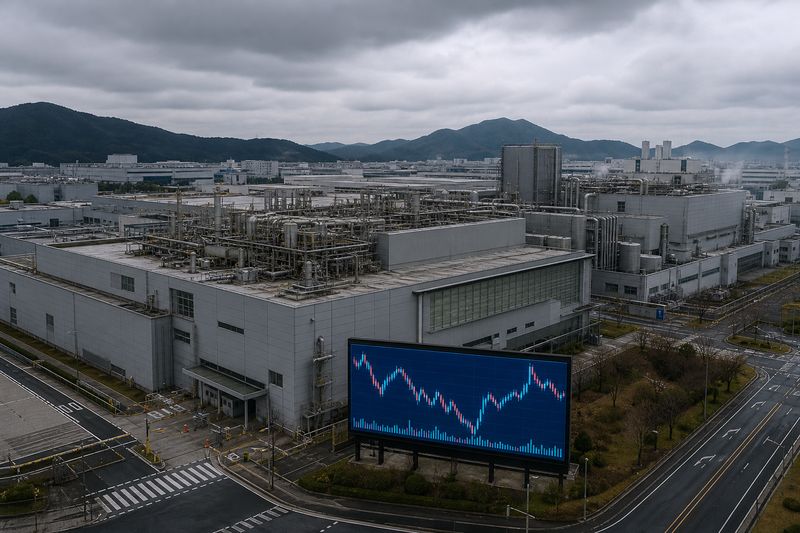
What a week to be alive and extremely stressed. The 2026 midterm elections flipped both the House and Senate to Democrats in what analysts are calling a full 'blue wave,' and Wall Street responded the way Wall Street always does to uncertainty: by absolutely losing it. The Philadelphia Semiconductor Index dropped 12.3% on November 5th alone, its second-largest single-day decline ever. The Nasdaq fell 5.52% on the same day, and $NVDA erased $447 billion in market cap in a single session. For context, that is roughly the GDP of Norway. Gone. In one day.
The thesis driving the panic is straightforward even if the selloff was not entirely rational. Democrats swept governorships in Texas and Georgia, two states central to the AI data center buildout story. Roughly 40 ballot measures restricting data center development passed across the country, according to Bloomberg Businessweek. If you built your AI infrastructure bull case on cheap land, loose zoning, and cooperative red-state politicians, Tuesday night was not your night. CoreWeave fell 9.5% and Nebius Group dropped 6.4% as neo-cloud names bore the brunt of the selling alongside chipmakers.
Not everyone was hiding under their desk, though. The broader market told a very different story by week's end. The S&P 500 closed up 1.58% on November 4th, the VIX cratered 20.26% in a single session, and TheChartGuys flagged a clear rotation into what they called the 'B team': XLF, XLV, XLU, XLP, and consumer staples all hitting new all-time highs while semiconductors burned. Cramer on Mad Money argued this is not a 2000 redux because, unlike pets.com, these companies actually make real things with real earnings. Reasonable take. Tom Lee at Fundstrat called the selloff an overreaction driven by forced hedge fund liquidations rather than fundamental AI demand destruction. Also a reasonable take. Both can be right.
The consumer side of the ledger had genuine bright spots. $ABNB posted its fastest revenue growth in three years (Q3 revenue up 19%) and raised full-year guidance for the third time. $TPR beat earnings and guided higher. $MCD stabilized guest counts. Meanwhile, Expedia shares fell 14% despite solid Q3 numbers, with management citing Q4 demand moderation from election uncertainty and Middle East tensions. Travel stocks remain a messy trade while tankers are literally on fire near the Strait of Hormuz.
On the political economy side, the bond market is repricing fast. Treasury markets shifted from pricing in three Fed hikes to roughly one and a half, per Bloomberg Podcasts coverage of the yield curve steepening. The 10-year yield closed at 4.9%, still elevated but retreating. Historically, the S&P 500 has closed higher 12 months after every midterm election since 1950, 19 for 19. Gridlock is usually good for stocks. The question is whether this cycle's AI-led concentration makes that history less useful as a guide.
The chatter this week peaked around semis, election reaction, and the Iran war trade unwinding, with oil falling on bets the new Democratic Congress pushes for de-escalation. If the Strait of Hormuz stays messy and Democrats take their time brokering an exit, energy and defense stay in the conversation. But the dominant social sentiment story heading into next week is simple: the AI infrastructure trade got repriced, and the market is now figuring out what it is actually worth without unlimited political tailwinds. Good luck to everyone involved, including this newsletter.