US-China Trade Truce Tickers: Who Wins the Hormuz Hedge?
Social buzz is split between energy plays riding the Hormuz tension and tech names getting a lift from the US-China thaw
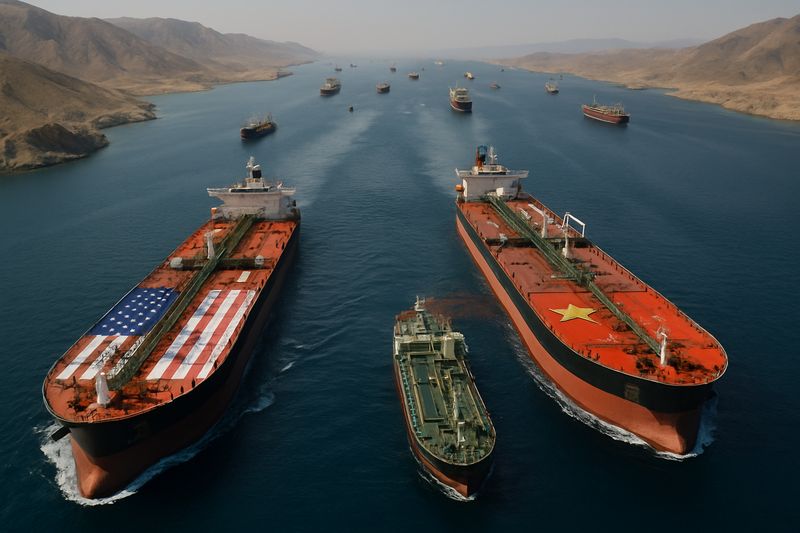
Two stories are dominating finance Twitter right now and they are pulling in opposite directions. On one side: the US-China summit produced a trade truce extension from November to January, plus a pledge to import more US coal and start an AI dialogue. On the other: the Strait of Hormuz is still a mess, Trump rejected Iran's peace proposal, and 10-year Treasury yields hit 5.18%. Buckle up.
The ticker getting the most YouTube airtime this week is $XOM. Bloomberg Podcasts laid out the Hormuz stalemate in detail, noting that a near-deal in mid-June collapsed and back-and-forth tension has since undermined any progress. That is textbook supply-shock fuel for integrated energy majors. X chatter is more aggressive, with traders pointing to the fact that 80 countries demanded the reopening of Hormuz at the UN and got exactly nothing done. Energy bulls are reading that as sustained upward pressure on crude, which keeps margins wide for refiners and upstream producers alike. The VIX sitting at a calm 14.21 means the broader market is not panicking, but energy-specific options activity tells a different story.
The second buzzy name is $NVDA. The US-China AI dialogue agreement, thin as it is, gave semiconductor social sentiment a real jolt. X is full of posts arguing that any pathway toward normalized AI chip exports is a green light. YouTube channels are more cautious, with Bloomberg Podcasts explicitly flagging that the summit's AI collaboration agreement remains unresolved and the truce deadline merely got pushed, not solved. That is an important distinction. A deadline extension is not a deal. It is a rain delay.
- Trade truce extended to January 10 (from November 10)
- China agreed to import more US coal, a narrower win than headlines suggest
- Hormuz negotiations described as stalled after a near-deal in June
- Trump approval at 33% per CNN poll, economic approval at 27%, which matters for reading political will on any Iran deal
The bull case for $XOM is straightforward: prolonged Hormuz tension with no diplomatic off-ramp keeps energy prices elevated and earnings estimates moving up. The bear case is that a surprise deal, even a partial phased one, could deflate the trade quickly. For $NVDA, the bull case rests on the AI dialogue opening a door that was previously shut. The bear case is that a January 10 deadline creates a ceiling on how far sentiment can run before the next round of uncertainty hits.
Bottom line: the crowd is not wrong to watch both names, but the catalysts are fragile on both sides. Energy bulls need Hormuz to stay stuck. Chip bulls need the January deadline to produce something real. Neither outcome is guaranteed, which is exactly why both tickers are generating so much noise right now.
BullApe's AI grades every pick against the S&P 500 - wins and misses published. See the track record →