Strait of Hormuz Is Closed, Oil Is at $127, and Your Portfolio Is About to Have a Very Bad Monday
Failed Iran peace talks + a US naval blockade = the energy trade of the decade, whether you wanted it or not
Ticker Ratings
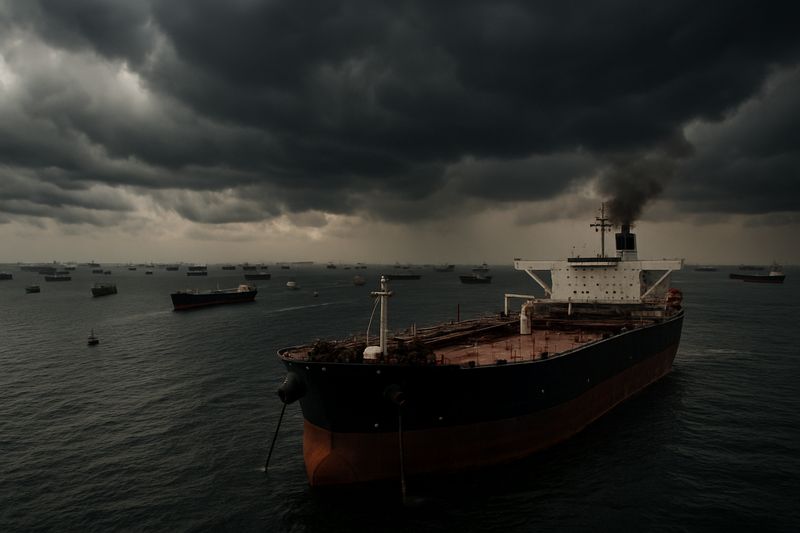
Let's not bury the lede: 20% of global oil supply just got cut off. President Trump announced a US Navy blockade of the Strait of Hormuz after peace talks in Islamabad collapsed — Iran wouldn't commit to abandoning nukes, the US called its offer final, and now 800 ships are stuck in the Persian Gulf. Bloomberg analysts describe this as the biggest energy shortfall in history, with 10-13 million barrels per day shut in and all floating buffer stocks already drawn down. Physical crude is trading at roughly $150 while futures sit near $82-$100 — an unprecedented divergence that screams chaos.
YouTube finance channels are split: Bloomberg podcasts are cautiously noting macro traders expect resolution, but warn normalization is months away even in a best-case ceasefire. Meanwhile ClearValue Tax and Jeremiah Babe are sounding full alarm bells — gas at $5-7/gallon, diesel already at $5.66, CPI already running hot at 3.3% (up from 2.4%), and a GDP that collapsed from 4.4% to 0.5% in Q4 2025. Reddit energy subs are buzzing around $SHEL specifically — Wael Sawan's Bloomberg interview dropped at the worst possible time to be defending that $9.5B Permian sale and the Guyana exit. Meanwhile $JPM, $C, and $WFC earnings next week just got a wildcard: FICC trading desks are about to print money on this volatility, but credit quality in energy-exposed commercial loans is a genuine question mark.
The fertilizer disruption is the sleeper story nobody's talking about — a 5-15% drop in fertilizer delivery at peak planting season could crater agricultural yields globally, meaning this energy shock could become a food shock by Q3. Stagflation isn't a warning anymore. It's Tuesday.
BullApe's AI grades every pick against the S&P 500 - wins and misses published. See the track record →