Redwire (RDW) and 2 Hidden Small-Caps Riding the AI Infrastructure Boom
The AI trade is a $1.4 trillion infrastructure story, and the real money might be hiding in places nobody's looking
Ticker Ratings
Everyone is staring at $NVDA approaching a $6 trillion market cap like it's a solar eclipse. Totally understandable. But while the crowd is craning their necks upward, some genuinely interesting smaller companies are doing very unglamorous, very profitable work down at street level. AI infrastructure spending is expected to hit $920 billion to $1.4 trillion by 2027, according to Bloomberg's Big Take Asia breakdown. That money doesn't all go to chip giants. A lot of it goes to the people building the physical scaffolding nobody Instagrams.
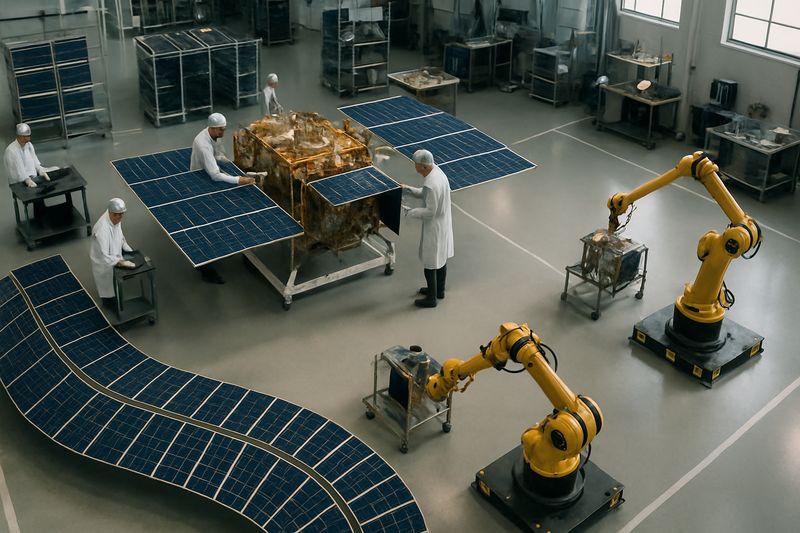
First up: $RDW, Redwire Corporation. This is a small-cap space infrastructure company that CNBC recently let its CEO explain why AI compute in orbit could be a very big market. The analogy used was satellite TV: everyone laughed at the idea, then virtually all broadcast TV moved to space. Redwire builds deployable structures, solar arrays, and now pitches itself as the picks-and-shovels play for space-based compute. Market cap sits well under $10 billion, institutional coverage is thin, and the catalyst is straightforward: any contract announcement tied to a hyperscaler exploring orbital compute, or a NASA/DoD deal, could reprice this stock overnight. Bear case: it's early-stage infrastructure in an extremely capital-intensive sector with long lead times and no guarantee the market materializes on any predictable schedule.
Second: $NBIS, Nebius Group. Brian Shannon flagged this one on TraderTV on October 6th as a breakout trade to watch, which is about as close to a neon sign as this category gets. Nebius is a European AI cloud infrastructure company that relisted on Nasdaq after spinning out of Yandex. It's building GPU clusters for AI workloads, essentially a picks-and-shovels cloud play for companies that can't get enough capacity from the hyperscalers. It's tiny relative to the opportunity, relatively unknown to US retail investors, and the catalyst is simple: any earnings print showing accelerating cloud revenue as AI CapEx spending stays elevated would be a meaningful re-rating event. Bear case: still early in its post-spinout life, carries execution risk, and competes with very well-funded players.
Third: $XPOF, Xponential Fitness. Okay, pivot. This one has nothing to do with AI, which is exactly the point. In a market where breadth is narrow and analysts at Investor's Business Daily are flagging 141 new lows vs. 45 new highs on the NYSE, finding a small-cap with an idiosyncratic catalyst matters. Xponential is a boutique fitness franchise operator with brands like Club Pilates and CycleBar. It went through a rough stretch tied to management overhang, but franchise fee revenue is sticky and recurring. The catalyst: any improvement in franchisee same-store sales data heading into a holiday spending season where experiences are outperforming goods. Bear case: consumer spending pressure and the 10-year yield at 5.31% make any consumer discretionary play a tough sell right now.
The AI boom is minting billionaires in places like server rack rails and PCB drill bits, as Bloomberg documented with King Slide's 3,000% market cap growth in four years. The next ones probably don't have Bloomberg documentaries yet. That's sort of the whole point.