Oil Tankers vs. the US Navy: Energy Stocks on Edge
Iran's tanker gambit, Saudi strikes, and a VIX at 28 are rewriting the energy trade in real time
Ticker Ratings
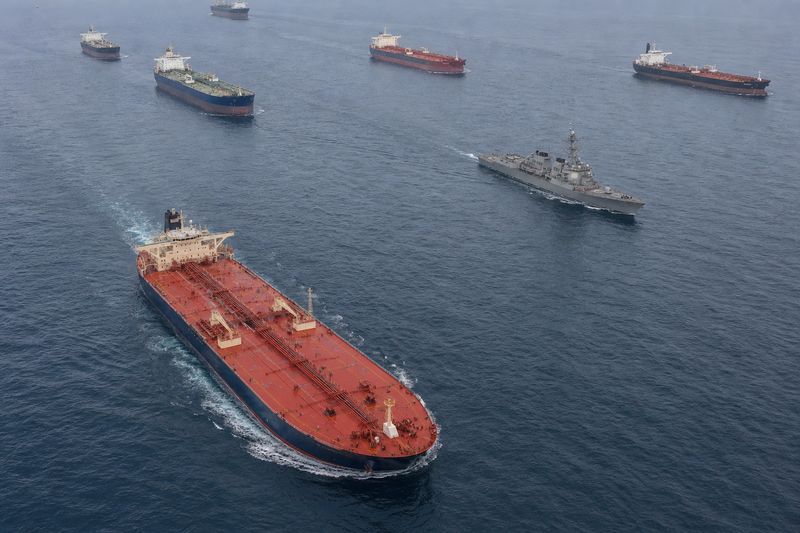
Fourteen Iranian oil tankers are reportedly preparing to challenge a US naval blockade through the Strait of Hormuz. About 20% of the world's oil supply flows through that chokepoint daily. If you are not watching energy tickers right now, you are watching the wrong screen.
The geopolitical backdrop this week is legitimately terrifying by any measure. Iran attacked US bases in Gulf countries, Bahrain took hits on an industrial facility, and UK maritime authorities flagged two tanker incidents near Oman after a vessel reportedly struck a mine east of Hormuz. The VIX surged to 28.44, up nearly 16% in a single session on November 19, and the broader market shed over 2% across the S&P 500 and Nasdaq simultaneously. This is not a drill.
YouTube's finance crowd is split on how to play it. The Jeremiah Babe channel is in full bear mode, arguing the tech bubble has already been pricked and that CNBC's "buy the dip" crowd on names like $NVDA are essentially cheerleaders in a burning building. Meanwhile, Bloomberg's podcast crew notes that credit expansion is still ongoing and economist Neil Dutta is calling this a correction, not systemic panic. So you have one camp screaming fire and another calmly pointing at the sprinkler system.
The names most exposed to a Hormuz disruption are the integrated oil majors and tanker operators. $XOM and $CVX both sit at the intersection of Middle East supply risk and domestic production strength. A prolonged Hormuz standoff historically spikes Brent crude prices fast, which is a revenue tailwind for upstream producers but a margin nightmare for refiners and airlines. The Jeremiah Babe video specifically flags an airline getting hit today, which tracks: jet fuel costs accelerate the moment Persian Gulf shipping lanes get complicated.
- Brent supply disruption risk is real, with 14 tankers potentially testing the blockade.
- Saudi Arabia and Bahrain are absorbing active strikes, raising insurance and routing costs for tankers.
- The 10-year Treasury yield dropped to 5.04% as investors rotated to bonds, signaling genuine fear, not just noise.
The Traveling Trader's video draws a sharp comparison to the 2018 correction, citing six signals to watch including credit spreads and VIX internals. Right now VIX is elevated but not in full capitulation territory. The energy trade is the one sector where bad geopolitical news is structurally bullish, and the market has not fully priced in a scenario where the Strait of Hormuz becomes an active conflict zone. If that changes after January 1, as Trump cryptically hinted, the energy sector is not just a hedge. It is the trade.
The tankers are moving. The question is whether the market is moving fast enough to notice.