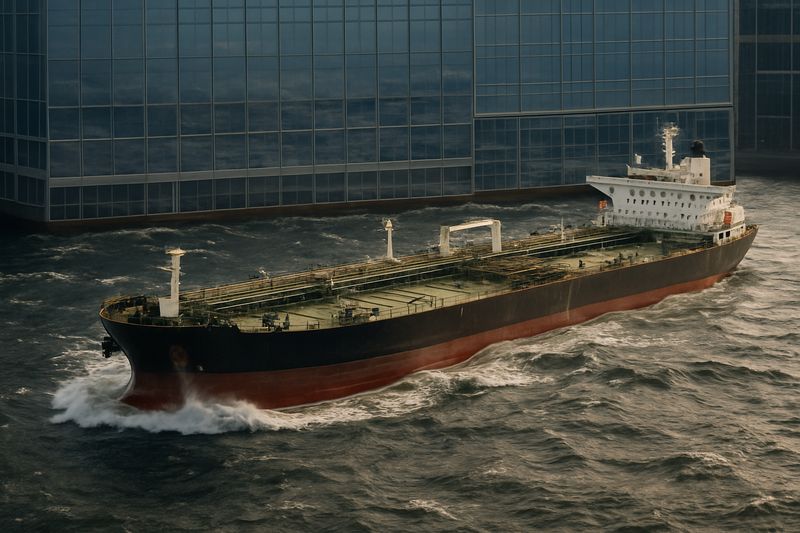
Let's set the scene: tankers getting attacked in the Strait of Hormuz at the highest rate since the Iran war began, a 10-year Treasury yield briefly touching a 24-year high of 5.35%, and a suspected plague case in Siberia. Meanwhile, the S&P 500 closed at a record 7,819 and the VIX drifted to 15.01. Normal week, totally fine, everyone's great.
The biggest sentiment story this week wasn't even close: energy and geopolitics dominated YouTube and X chatter by a wide margin. The stat that made everyone stop scrolling came from a CNBC clip revealing that chartering a supertanker from the US Gulf Coast to China now costs $76 to $77 million, versus a pre-war norm of $7 to $10 million. That's a 10x increase, and Trafigura is reportedly the buyer on the highlighted deal. When shipping costs multiply tenfold, it shows up everywhere downstream, in fuel prices, in margins, in inflation prints. Traders who were watching energy content last week had a head start.
Shell's record refining margin story from Reuters (impact 4.7/5) was the most-cited headline across sentiment sources, validating the bull case for integrated energy majors who benefit when supply crunches while demand holds. On the bear side: OPEC+ just delayed its capacity review because the Iran war scrambled their expansion plans, so any supply-side relief is further away than the market was pricing three months ago.
The second biggest chatter cluster was AI infrastructure, and it was relentlessly bullish. Nvidia hit a new record high and is approaching a $6 trillion market cap, with Morgan Stanley and DA Davidson both beating the drum louder. The Constellation Energy surge of over 12% after Alphabet signed a 20-year nuclear power purchase agreement was the sleeper hit of the week: it confirmed that hyperscalers are now structuring decade-long energy commitments to feed their data centers. That's not a trade, that's an infrastructure supercycle locking in.
- What played out from last week: Energy bulls were right. Shipping disruption calls aged extremely well.
- What surprised: Equity resilience. Markets absorbed a 5.35% yield spike and kept printing records. Cramer's bifurcation call (AI winners vs. everything else) looks more correct every session.
- Watch next week: Whether the 10-year yield can hold below 5.30% and whether earnings season CapEx commentary from hyperscalers confirms or cracks the AI trade.
The market right now is basically a duck: serene on the surface, paddling furiously underneath through tanker attacks, yield spikes, and a Siberian mystery illness. The sentiment data says retail investors are still buying the AI story with both hands. The question is how long the duck can keep up the act before something in the plumbing breaks.