Iran Closes Hormuz: What the Bond Market Revolt Means for Stocks
A US-Iran war, collapsing trade talks, and a bond market in revolt are converging into one of the messiest macro backdrops in years
Ticker Ratings
Let's play a game. Imagine you woke up from a six-month coma and someone handed you today's headlines: the Strait of Hormuz is closed indefinitely, US-Canada trade talks just collapsed overnight triggering 50% tariffs on $20 billion in Canadian goods, a former MI6 chief is warning about CIA politicization, and bond investors are openly revolting against a US Treasury Secretary whose buyback intervention is being described as "largely political and insufficient." You'd assume the S&P 500 was down 15%. Spoiler: the data feed is broken, so we honestly don't know, but the vibes are not great.
The biggest macro signal right now is the bond market. Yields on the 10-year Treasury are above 4.5% and the 30-year is above 5%, according to Simon Dixon's analysis on YouTube, creating genuine stress in mortgage and debt markets. Barry Ritholtz put it plainly in a Bloomberg podcast: the bond market is a $100 trillion global market and no single government can control it for long. Bessent's intervention is jawboning, not surgery. When bond investors revolt, equities eventually have to reckon with the higher discount rate, whether they want to or not.
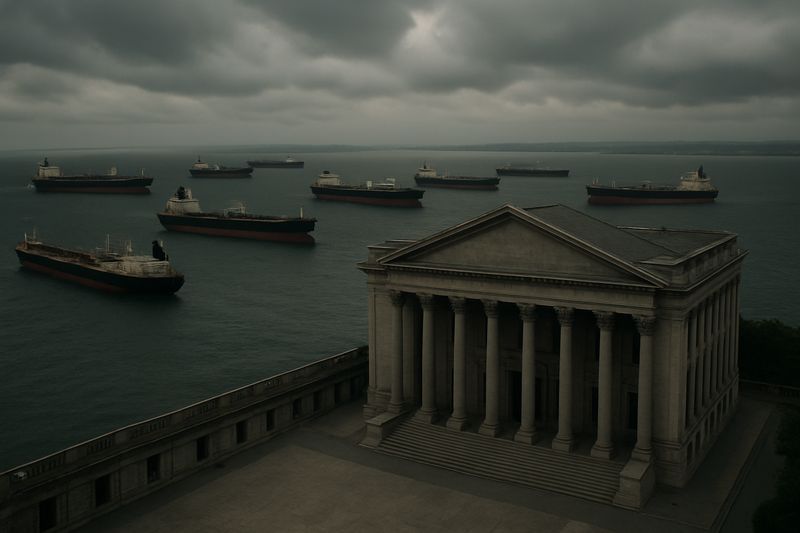
Meanwhile the geopolitical backdrop is legitimately unprecedented. Iran has closed the Strait of Hormuz and says it stays shut until the US meets interim deal conditions. Trump responded by threatening to bomb Oman. The UAE reported two missiles launched from Iran. Bessent is promising the "toughest ever sanctions on Iran" and asking China to cooperate, which is, let's say, optimistic. Bloomberg Economics notes that 47 years of sanctions haven't broken Tehran's will, though the current environment differs because Iran's regional proxies are weaker and the country faces 66% inflation and a currency collapse. This is not a two-day news cycle.
The sector implications are real. Energy is the obvious beneficiary of a sustained Hormuz closure, full stop. Defense is getting a structural tailwind from a world that suddenly looks a lot more multipolar, a point reinforced by IBD's analysis of market rotations in their latest YouTube breakdown. The Nasdaq is not leading right now, but it's also not crashing, partly because Nvidia's revenue growth is near mid-90% and the AI data center buildout is too large to stop mid-stride. The RSP (equal-weight S&P 500) is the canary here: if it breaks its current character, breadth deterioration follows fast.
The US-Canada trade collapse adds another wrinkle. American whiskey exports to Canada dropped roughly 70%, from $230 million to $60 million, after Canadian restrictions kicked in, and the new 50% tariff on Canadian plywood, liquor, and hockey equipment will feed back into inflation just as the Fed is trying to declare victory. Sticky inflation plus a revolting bond market plus a Middle East war is not the environment where you buy the dip on a Tuesday morning and take a nap.
The market that ignores all of this is either right (it's priced in, calm down) or it's the last guy to hear the fire alarm, and history suggests it's usually the second one.