Gold Down 30% From $5,600 Peak: Is This the Buy Signal?
Central banks are still buying, Iran war inflation is real, and the selloff has a very specific explanation
Ticker Ratings
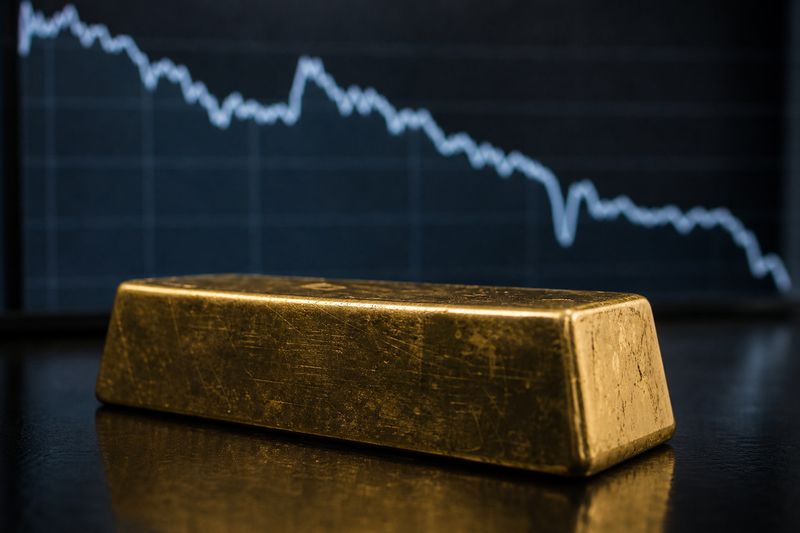
Gold did something remarkable in January 2026: it hit an all-time high of roughly $5,600 per ounce. Then it fell approximately 30%. If you're the type of person who sees a 30% drawdown and immediately assumes the story is over, this article is going to annoy you.
The ClearValue Tax breakdown making rounds on YouTube right now breaks the correction into three clean buckets, and honestly, it holds up: rising interest rates (thanks in large part to Iran war-driven oil price surges feeding into inflation), profit-taking from investors who bought gold at dramatically lower levels, and forced selling from margin calls elsewhere in portfolios. None of those three reasons are "gold is fundamentally broken." They're all situational. And situational selloffs in strong secular trends tend to be, well, opportunities.
Here's the macro context that makes the bull case hard to dismiss. The 10-year Treasury yield closed at 4.88% on November 10th, creeping higher even as equities wobbled. Fed officials are openly discussing a 50 basis point rate hike, which is the kind of language that sent the VIX spiking to 28.18 just last week (before cooling to 19.46). That's a lot of financial stress floating around. And historically, sustained rate anxiety and geopolitical chaos are exactly the conditions where gold builds a base and then goes on another run.
The demand side is also not cooperating with the bear thesis. Central banks bought 321 tons of gold in the most recent tracked period, per the same YouTube breakdown. These aren't momentum traders. Central banks don't FOMO into gold at $5,600 and panic-sell at $3,900. They're buying on a structural thesis, and that thesis involves de-dollarization, sanctions risk, and a general distrust of paper promises. The Iran conflict, which has escalated to the point where the US Treasury Secretary was relocated to a military base due to Iranian threats, is not exactly a de-escalation signal for hard asset demand.
The bear case is real, though. If the Fed actually executes a 50bp hike and growth holds up, real yields rise and gold's non-yielding nature becomes a genuine drag. The S&P 500 is still near 7,520 despite last week's carnage, which means risk appetite hasn't fully collapsed. Gold needs fear to really fly, and right now fear is present but not dominant.
But a 30% discount on an asset that central banks are still aggressively accumulating, during an active Middle East war with active Hormuz shipping disruptions? That's not a warning sign. That's a clearance sale with geopolitical gift wrapping.