FAA Ground Stop Strands 1.5M: Cyberattack or Crumbling Infrastructure?
A nationwide air traffic control meltdown just exposed America's most expensive blind spot, and traders are starting to notice
Ticker Ratings
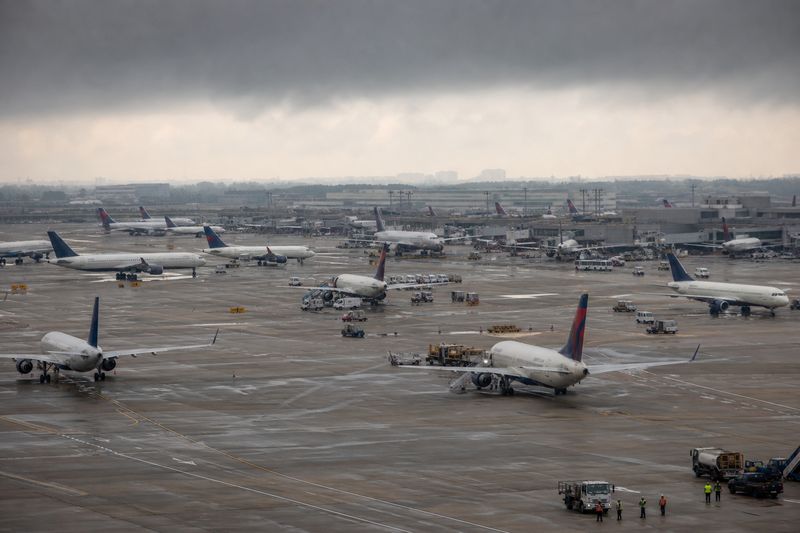
Somewhere between 3,500 grounded flights and 10,000 delays, the United States quietly had a very bad afternoon. A telecommunications outage knocked out air traffic control communications for over four hours, stranding roughly 1.5 million passengers nationwide and leaving Homeland Security Secretary Mullen doing the one thing markets hate most: shrugging at a press conference. He could not rule out a cyberattack. That sentence alone should be doing a lot more damage to sentiment than it currently is.
Transportation Secretary Duffy called the situation an emergency and immediately requested $50 billion in congressional funding to modernize aging ATC infrastructure, noting prior legislation had already allocated $12 billion with limited visible progress. The timing here is not subtle. This outage lands in the same week that $6.3 billion was stolen from Binance in a separate hack, Iranian-linked actors struck four tankers in the Strait of Hormuz, and a suspected Chinese intelligence operative was allegedly linked to the now-resigned CEO of Nvidia. The theme writing itself is: critical infrastructure is not ready for 2026-level threat actors.
Social sentiment on this one is split in a revealing way. The retail crowd (heavily represented in YouTube commentary from channels like Jeremiah Babe) is leaning hard into the cyberattack theory, with some framing it as a coordinated escalation alongside the Hormuz attacks. Institutional-leaning commentary is cooler, pointing out that US ATC infrastructure genuinely runs on hardware that predates most people's Netflix subscriptions. Both camps agree on one thing: $50 billion is a number that lands in someone's earnings report eventually.
The obvious beneficiaries in this setup are defense and infrastructure tech names. The VIX ticked up to 18.7 this week, a 6.92% jump, and the Nasdaq dropped 0.91% on Friday, with tech absorbing most of the week's selling pressure. Traders watching the broader tape note the S&P 500 is still only about 3.3% off all-time highs, per Barry Ritholtz's read on Bloomberg Podcasts, suggesting this is concentrated fear rather than systemic collapse. But concentrated fear has a way of spreading when the news cycle keeps feeding it.
The bear case here is straightforward: if this was a cyberattack, the geopolitical risk premium the market is currently pricing is way too low. The bull case is equally clear: Congress loves nothing more than a dramatic infrastructure failure as justification to write large checks, and large checks flow somewhere. Keep an eye on who bids for those modernization contracts, because the FAA just handed Washington a very expensive permission slip.
The most unsettling part of today is not that the system failed. It's that the person in charge of protecting it went on camera and said, essentially, we have no idea what happened. In 2026, with everything else going on, that's not a press release, that's a warning shot.
BullApe's AI grades every pick against the S&P 500 - wins and misses published. See the track record →