Dick's Sporting Goods $DKS Posts Worst Single-Day Drop Ever
An inventory glut wrecked Dick's quarter, but is this the last great sporting goods retailer trading at a discount?
Ticker Ratings
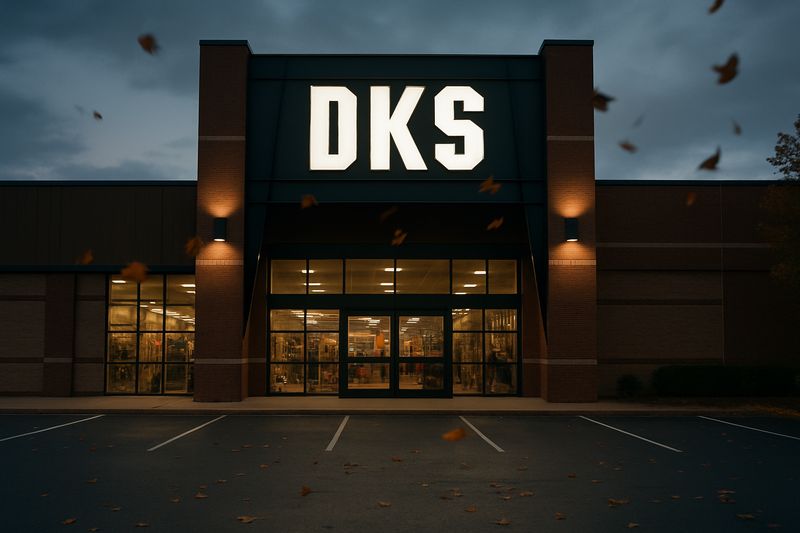
$DKS had a week it would like to forget. Dick's Sporting Goods posted its worst single-day stock decline in company history after a brutal earnings miss and a guidance cut that left analysts scrambling to justify their price targets. The culprit: an industry-wide inventory glut that crushed margins at the Marmaxx-adjacent moment nobody wanted.
The timing was brutal. While Abercrombie and Fitch and Urban Outfitters were popping 35% on the same day, Dick's was hitting a 52-week low near $38, the lowest levels since 2014. That is not a typo. The stock is trading where it was twelve years ago. Consumer discretionary is a tough neighborhood right now, and Dick's just got mugged in broad daylight.
The bear case is not complicated. An inventory overhang is pressuring pricing power across the entire sporting goods sector, guidance got cut, and the Marmaxx division (TJ Maxx and Marshall's territory) is showing genuine weakness according to a fresh Jefferies downgrade that also took $TJX from buy to hold with a price target slashed from $180 to $145. When the discount retailers are struggling to move excess athletic gear, you know the pipeline is clogged upstream.
But here is where it gets interesting. Jim Cramer, whose CNBC commentary this week was unusually grounded, made the case that Dick's remains the last major sporting goods retailer with genuine national scale in the United States. After the Sports Authority implosion and years of consolidation, Dick's owns the floor. The inventory problem is cyclical. The competitive moat is structural. Cramer's verdict: he is not giving up on the stock, and he called out that the near-term pain does not change the long-term survivor thesis.
The real question for investors is whether this is a value trap or a coiled spring. The sector backdrop is genuinely awful: consumer spending growth is running at a weak 1.8 to 2%, middle-income households are under pressure per Columbia Business School's Abby Joseph Cohen, and subprime auto delinquencies are rising. Discretionary retail does not love that environment.
Still, at 2014 prices, Dick's is essentially daring you to bet against the only team left on the field.