Democrats Win Congress and 46 of 47 Data Center Ballot Measures
Voters didn't just flip Congress, they voted on zoning laws and accidentally rewrote the AI playbook
Ticker Ratings
| Ticker | Rating | Entry Price | Current | $ Gain | % Gain |
|---|---|---|---|---|---|
| NVDA NVIDIA CORP | hold | $190.05 | - | - | - |
| SNDK Sandisk Corp | sell | $882.00 | - | - | - |
| ABNB Airbnb, Inc. | buy | $190.70 | - | - | - |
| TPR TAPESTRY, INC. | buy | $133.99 | - | - | - |
| GE GENERAL ELECTRIC CO | buy | $312.31 | - | - | - |
| TSLA Tesla, Inc. | sell | $350.99 | - | - | - |
| IONQ IonQ, Inc. | hold | $28.59 | - | - | - |
| EXPE Expedia Group, Inc. | hold | $271.53 | - | - | - |
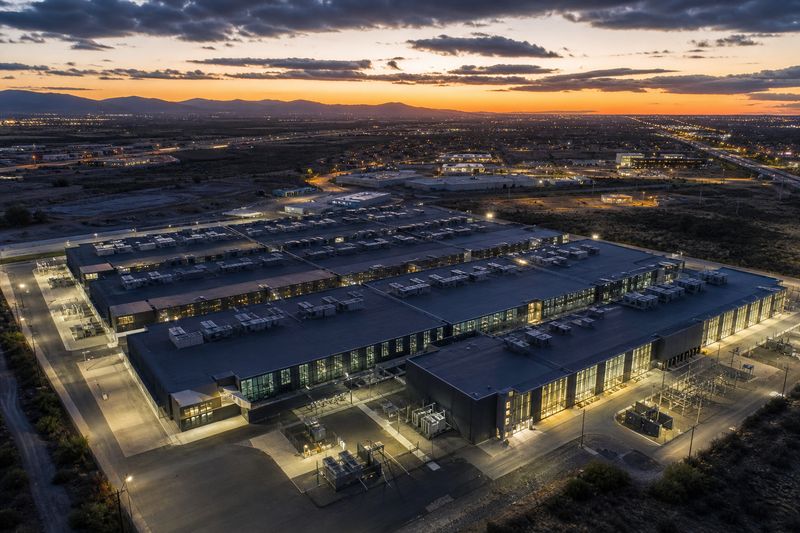
Here's a sentence you didn't expect to read this week: the biggest threat to the AI trade in 2026 wasn't the Fed, wasn't a DeepSeek moment, and wasn't a disappointing Nvidia quarter. It was zoning committees. 46 out of 47 ballot measures targeting data center development passed across 13 states, and Wall Street is still trying to figure out how to price that.
The numbers from November 5th are genuinely historic. The Philadelphia Semiconductor Index dropped 12.3%, its second-largest single-day decline since March 2020. The Nasdaq fell 5.52%, wiping out roughly $2.3 trillion in market value in a single session. Nvidia alone shed $447 billion in market cap. Bloomberg's Sunonny Banga flagged technically oversold conditions across the S&P, KOSPI, and the semiconductor index, so a bounce is plausible, but "oversold" is not the same as "fixed."
The core issue, as Bloomberg Businessweek and Tom Lee at Fundstrat both framed it, is that markets had priced in a very specific future: massive uninterrupted data center capex through 2027 and 2028, hypergrowth in AI infrastructure, and a permissive political environment to build it all. Democrats winning governorships in Texas and Ohio, combined with those ballot measures, suggests that future just got materially more complicated. GDP capex growth forecasts are already being revised down from 4-5% to more modest levels, per Apollo's chief economist. The bond market is repricing too, with Fed cut expectations falling from roughly three cuts to one and a half.
Tom Lee is calling the selloff an overreaction driven by forced hedge fund liquidations rather than actual deterioration in AI demand, and he's not wrong that companies are still finding real value in AI tooling. But even if the demand story holds, the supply side just got a political headache that doesn't have a simple fix. Unlike Liberation Day in April 2025, there's no one executive order that reverses 46 ballot measures across 13 states.
The clearest winners in all this chaos? Companies with zero exposure to data center construction timelines. Airbnb ($ABNB) posted its fastest revenue growth in three years and surged 10% after hours. Tapestry ($TPR) beat earnings and raised guidance. GE Aerospace ($GE) CEO Larry Culp went on CNBC to remind everyone his company has a $210 billion backlog extending into the 2030s and has survived 20 administrations. That kind of boring, durable revenue visibility is suddenly looking very attractive.
The AI trade isn't dead, but it just got a lot more local, and it turns out "local" is where things get complicated.
BullApe's AI grades every pick against the S&P 500 - wins and misses published. See the track record →
Mentioned: $NVDA, $SNDK, $ABNB, $TPR, $GE, $TSLA, $IONQ, $EXPE