CVX and HAL Set to Flood Venezuela With Billions in Oil Cash
The Heritage Foundation calls it a strategic masterstroke. Venezuelans are calling it something else entirely.
Ticker Ratings
While everyone is watching Canada-US trade drama like it's a reality show with maple syrup stakes, a much quieter geopolitical deal is reshaping the energy map. A US-Venezuela oil agreement is now on the table, and if you believe Victoria Coates of the Heritage Foundation, it's the kind of deal that gets written about in history books. She argues it effectively doubles US proven reserves by bringing 65 billion barrels of Venezuelan oil under American influence. That's not a rounding error. That's a continent-sized number.
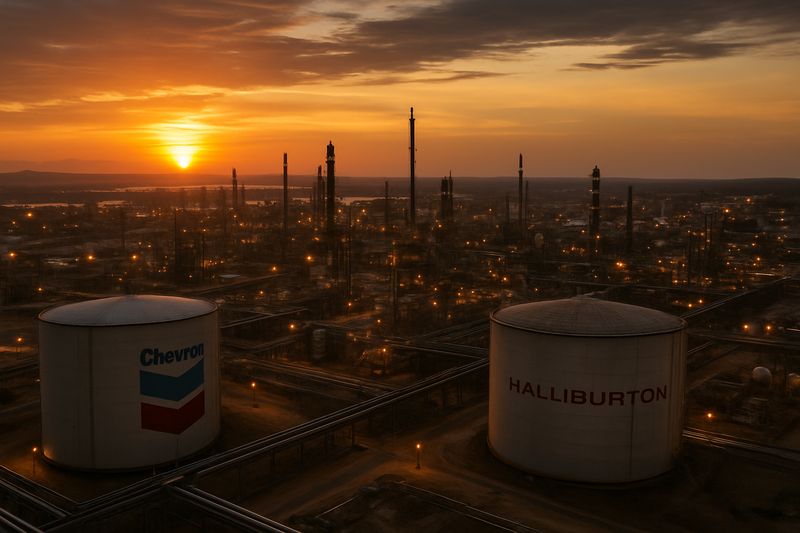
The companies positioned to cash in are exactly who you'd expect: $CVX, $XOM, and $HAL. According to Bloomberg coverage this weekend, large-scale investment in Venezuelan ports, pumping facilities, and energy infrastructure is anticipated, with US government backing essentially serving as the guarantee on the whole operation. Chevron already has a foothold in Venezuela from its pre-sanctions era work, which gives it a meaningful head start over the competition.
Here's the part that should make investors at least pause before going full bull mode. The Venezuelan public isn't exactly throwing a parade. There's growing domestic sentiment that the deal feels colonial, and Bloomberg's coverage flags this directly: anti-American blowback could accelerate political instability, potentially leading to a less favorable government post-election. If the political winds shift in Caracas, those infrastructure investments don't exactly come with a refund policy.
- $CVX: Existing operational presence in Venezuela gives it first-mover advantage on infrastructure buildout
- $XOM: Massive capital base and deepwater expertise make it well-suited for complex Venezuelan fields
- $HAL: As the oilfield services play, Halliburton wins regardless of which producer leads, since someone has to build all that stuff
There's also a macro tailwind worth noting. Bloomberg's Iran coverage highlights that oil prices and Strait of Hormuz risk are already front of mind for energy investors. A reliable Western Hemisphere supply source, even a politically complicated one, is exactly what the market has been quietly wishing for. Venezuela sitting in America's backyard, rather than China's orbit, changes a lot of the long-term calculus.
The bull case is enormous reserves plus infrastructure spend plus geopolitical optionality. The bear case is that Venezuela has a long and creative history of making foreign energy investors regret their optimism. Either way, $HAL is probably the least complicated way to play it, because when two giants fight over an oil field, the company renting them the drills tends to sleep pretty well at night.