US-Iran War Enters Month 6: Traders Now Bet on Strategic Defeat
Social sentiment is shifting from 'short-term shock' to 'structural risk' as analysts warn of bank losses, cyberattacks, and a war that was supposed to be over by now
Ticker Ratings
Remember when this was supposed to be a quick one? Early forecasts called for a four-to-eight week US-Iran conflict. We are now six months in, and the New York Times is apparently using the phrase strategic defeat. That is not a phrase that shows up in bullish macro decks.
Social sentiment on YouTube and X has done a full rotation. Six months ago it was 'buy the dip on oil names and wait.' Now the Jeremiah Babe channel, which tracks fear-heavy retail sentiment, is running segments on Iranian cyberattacks hitting water systems in up to seven US states, bank blowup risk, and analyst Charles Nenner's call for a major stock market downturn. That is not fringe content anymore. That is the conversation moving mainstream.
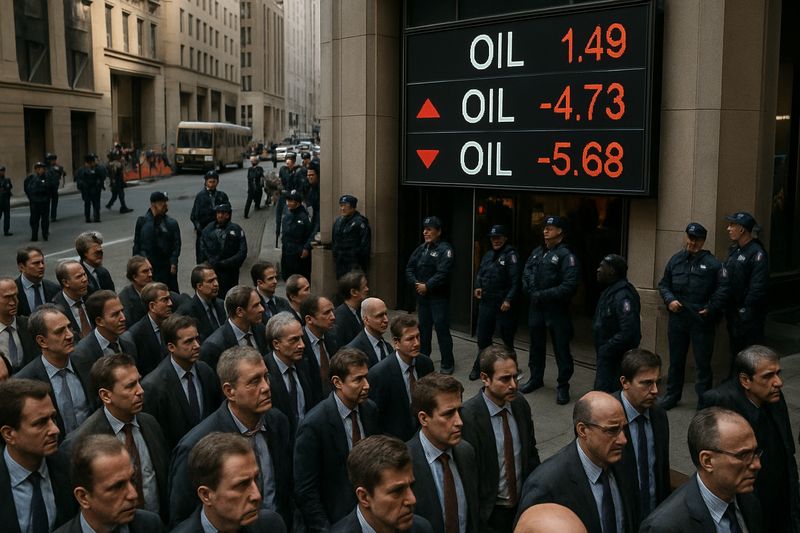
The market signals are equally messy. Shell's Q2 profit more than doubled to $9.8 billion, the second-highest on record, which sounds great until you realize that headline is also a political lightning rod and energy windfalls historically compress the moment the shooting pauses. Meanwhile, oil fell more than $1 in a single session despite the war still running hot, suggesting traders are already gaming out greater supply flows. So energy is both the obvious winner and the most vol-exposed trade in the room right now.
The Federal Reserve held rates for the fifth consecutive meeting, voting 9-3, and new Fed Chair Kevin Warsh's press conference triggered what Bloomberg analysts are calling a 'twisted tantrum': long-end yields steepened, credit spreads widened, and nobody got the inflation-fighting clarity they came for. The Bank of England also held, explicitly flagging that it is waiting for a clearer read on Iran war inflation pass-through. Two of the world's most important central banks are essentially saying: we have no idea how to model this conflict, so we're doing nothing. That is a sentiment signal in itself.
On the security front, a drone strike near the Suez Canal adds a new dimension. Roughly 12% of global trade moves through that waterway. The Jeremiah Babe content audience is not wrong to be nervous about that one, even if the delivery is, let's say, maximalist. The structural risk here is that this conflict is no longer a shock to be traded. It is a baseline to be priced, and markets hate that more than they hate bad news.
Six months in, the most dangerous trade is still assuming the timeline compresses back toward normal. The war that was supposed to be priced in by now has not been priced in yet.
BullApe's AI grades every pick against the S&P 500 - wins and misses published. See the track record →