US-Iran War at Day 10: What $85 Oil Means for Your Portfolio
Ten nights of US strikes, a Saudi naval blockade, and $37.5 billion in Pentagon spending later, the market is somehow still buying dips
Ticker Ratings
| Ticker | Rating | Entry Price | Current | $ Gain | % Gain |
|---|---|---|---|---|---|
| HUT Hut 8 Corp. | buy | $109.13 | - | - | - |
| MU MICRON TECHNOLOGY INC | buy | $986.50 | - | - | - |
| NVDA NVIDIA CORP | buy | $206.33 | - | - | - |
| SCHW SCHWAB CHARLES CORP | buy | $100.11 | - | - | - |
| MMM 3M CO | buy | $170.75 | - | - | - |
| DHR DANAHER CORP /DE/ | sell | $178.82 | - | - | - |
| EFX EQUIFAX INC | sell | $173.00 | - | - | - |
| GE GENERAL ELECTRIC CO | buy | $341.60 | - | - | - |
| CBRL CRACKER BARREL OLD COUNTRY STORE, INC | hold | $53.80 | - | - | - |
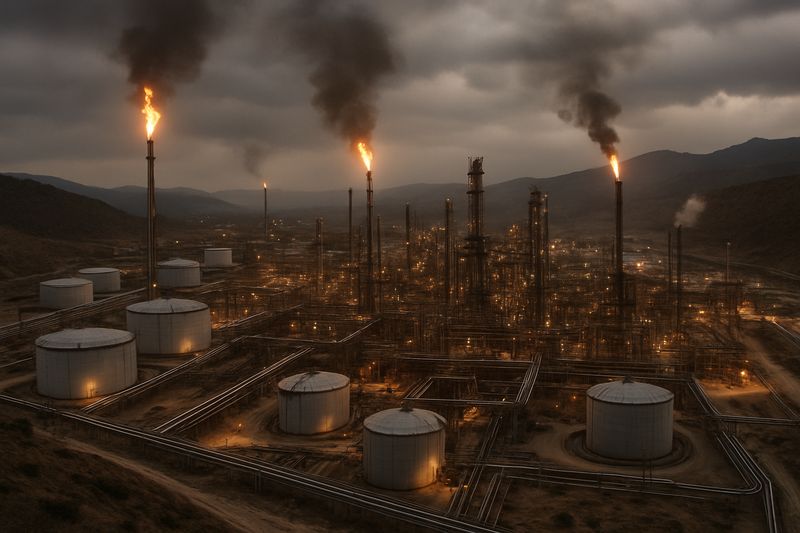
Ten straight nights of US military strikes on Iran. Saudi crude tankers turning back. Two Dynacom Tankers vessels attacked off Oman. The Strait of Hormuz, through which roughly 20% of global oil flows, is now a de facto war zone. And yet on July 21st, the Dow closed up about 0.75%, the S&P 500 gained roughly 0.8%, and the Nasdaq led with a 1.3% pop. Classic market brain, really.
The macro picture is genuinely alarming if you squint past the green candles. WTI crude crossed $85 a barrel and Brent is brushing $91. Senator Mark Warner (D-VA) pointed out on Bloomberg that gas is already at $4 at the pump with diesel north of $5, calling this conflict a war of choice without a clear exit plan. On the other side, Senator Rick Scott is asking for more bombing and says the total Pentagon supplemental request is roughly double the $37.5 billion Hegseth cited publicly. Nobody knows the real number. That is the kind of thing that eventually shows up in bond yields, which already hit a concerning 4.63% on the 10-year Treasury.
Jamie Dimon is not buying it. Per a widely circulated YouTube segment, Dimon says markets are underestimating risk and he would not touch equities or long-dated Treasuries at current prices. The US Strategic Petroleum Reserve reportedly has roughly 43 days left before hitting a critical low. Gold is approaching $4,100. These are not vibes, these are numbers.
Still, the rotation story is real. Retail investors on the Schwab platform are buying every dip with 3.5x more trading volume on down days, rotating out of Mag Seven names and into AI-adjacent plays. Charles Schwab reported client assets up roughly 22% through Q2, ahead of the market's 21% gain. Earnings season is cooperating too, with 88% of S&P reporters beating expectations so far and semiconductors delivering roughly 100% earnings growth year over year per Bloomberg Surveillance. The gap between Mag Seven earnings growth and the rest of the S&P is narrowing, which is genuinely healthy market broadening if it holds.
The energy sector is the obvious beneficiary of Hormuz risk, but it is also the most headline-dependent trade on the board. Any ceasefire leak sends oil down hard, any new Houthi escalation sends it back up. Defense names and AI power infrastructure, think data center REITs and power-hungry hyperscaler landlords like $HUT, which just signed a second 15-year lease worth nearly $10 billion, are arguably the cleaner long-term expression of both the war economy and the AI buildout happening underneath all this noise.
The market that refuses to go down in the face of a genuine shooting war in the Persian Gulf is either the most resilient market in history or the most complacent one. History suggests those two things are not mutually exclusive right until the moment they are.