US Fires on Ships in Hormuz: What Traders Are Missing
Social sentiment is split between war-trade euphoria and genuine macro panic as the Strait of Hormuz crisis enters a dangerous new phase
Ticker Ratings
Let's just say the quiet part out loud: the United States literally fired on a Panama-flagged vessel attempting to break Iran's blockade of the Strait of Hormuz, and the S&P 500 is still sitting roughly 13% higher on the year. Either markets know something geopolitics doesn't, or this is the most expensive case of collective denial since March 2020.
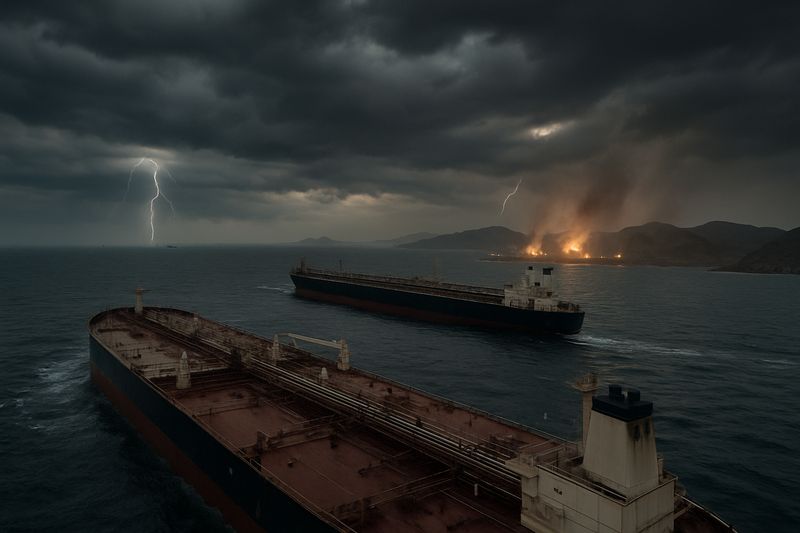
The news flow Monday is genuinely chaotic. Reuters is reporting simultaneously that Iran tied Hormuz reopening to "several demands" from Washington, that the UAE says Iran attacked an ADNOC vessel with a missile, and that Trump is oscillating between offering Iran a deal and threatening to "hit them really hard." Gulf shipping traffic through the strait has fallen to just six vessels, down from normal flows of 20-plus per day. That's not a disruption. That's a shutdown. WTI crude is above $83 with Brent clearing $88, and oil analysts on Bloomberg's podcast circuit are flagging serious upside risk if a resolution doesn't materialize in the next 48 hours.
Social sentiment on X is doing its usual thing: half the feed is calling this a buying opportunity in $USO and energy names, while the other half is posting increasingly desperate "is the Fed going to have to do something" takes. The CNBC Midday crew noted stocks are "modestly lower but near record highs," which somehow feels both accurate and completely insane given the context. Existing home sales also dropped 1.7% in July and median prices held at $434,100, adding a domestic macro headwind to an already complicated picture.
The bull case, per Northern Trust, is that the market is pricing a negotiated resolution, EM equities remain attractive demographically, and S&P 500 earnings could climb from $358 to $405 by end of next year regardless of what happens in the Gulf. Anastasia Amoroso on Bloomberg pointed out that real-time rent data from Zillow and CoStar suggests core inflation may already be below 2% using real-world proxies, which gives the Fed a lot more runway than the bond market currently implies. The 10-year sits around 4.68%.
The bear case is simpler: Trump is demanding Iran pay reparations for deaths, Iran is demanding transit fees worth roughly $100 billion annually as part of any Hormuz deal, and neither side has a face-saving off-ramp. The longer this drags, the worse it gets for airlines, industrials, and anyone with supply chain exposure to the Gulf. On Holdings already cratered 20% on weak Q2 sales, a reminder that any macro wobble hits momentum names fast.
The market's bet right now is that cooler heads prevail. History says that's usually the right bet. History also didn't account for a world where the US Navy is shooting at tankers in the world's most critical shipping lane.