The Strait of Hormuz Is On Fire and Wall Street Is Flying Blind
US-Iran war escalates, the Nasdaq craters 4.5%, and every major index feed reads 0.0 — the market's nervous system is offline while the world burns
Ticker Ratings
Let's get the elephant out of the room: every single market data feed in our system is reading 0.0 (N/A) right now. SP500, Nasdaq, VIX, 10-Year Treasury — all flatlined. Either the servers are having an existential crisis, or this market is so broken it literally cannot be measured. Both feel equally plausible this weekend.
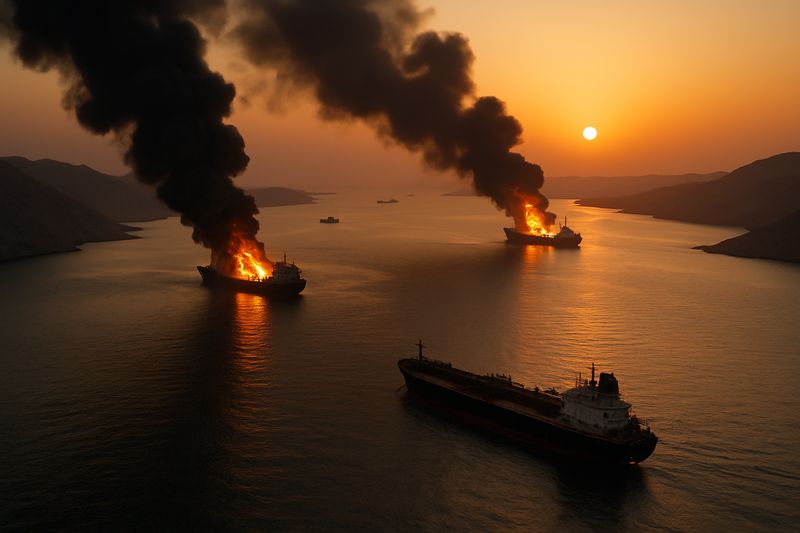
What is measurable: the news flow is a five-alarm fire. The Strait of Hormuz — through which roughly 20% of global oil supply passes — has seen ship traffic collapse from 140+ vessels daily to just 30-40. Two LNG tankers already turned around mid-route. The International Maritime Organization paused evacuations entirely. Meanwhile, Bloomberg reports tech stocks had a historically brutal week, with Nasdaq dropping 4.5% and leveraged ETFs alone contributing an estimated $45 billion in forced selling on Wednesday. $MU (Micron) was the lone bright spot — 74% quarter-over-quarter growth — but even strong earnings couldn't stop the bleeding when the macro backdrop looks like a deleted scene from a geopolitical thriller.
The social sentiment picture is equally spicy: YouTube's finance community is split between doomers citing a $40 trillion national debt getting strained by military operations, and crypto bulls pointing to Bitcoin adoption in Iran as the most compelling real-world use case anyone has seen. When your currency is getting sanctioned into oblivion, peer-to-peer digital money stops being a meme.
The Fed is watching PCE run above 4%, Bloomberg's Edward Harrison expects rate hikes sooner than markets price, and the US pet market is somehow projected to hit $250 billion — because Americans will absolutely keep buying organic kibble through a regional war. June non-farm payrolls drop Thursday with consensus at 135,000, though the 3-month average of 188,000-200,000 suggests the labor market hasn't gotten the memo that everything is on fire.
The market isn't pricing risk right now — it's just vibing in a fog of war, waiting for the Hormuz situation to either resolve or get dramatically worse. In 2026, those feel like the only two settings.