Tesla-SpaceX Merger: Odds Hit 90% as $TSLA Bulls Double Down
Social sentiment is split between Tesla's thin margins and the blockbuster merger speculation dominating the conversation
Ticker Ratings
Earnings misses are supposed to kill a stock's vibe. Someone forgot to tell $TSLA bulls.
Tesla posted a rough Q2 by almost any traditional metric. Net margin sits at a paper-thin 3.95% despite over $97 billion in annual revenue, capex ballooned 142% year-over-year to $5.79 billion, and shares fell 4% after hours on the print. The Seeking Alpha Quant model has it at a hold, citing softening margins and EPS growth. Morgan Stanley and JP Morgan both issued notes trying to spin the capex blowout as a feature, not a bug, framing Tesla's $25 billion-plus full-year capex guidance as the price of owning the autonomous vehicle and robotics future. That's a bold pitch when the present looks this squeezed.
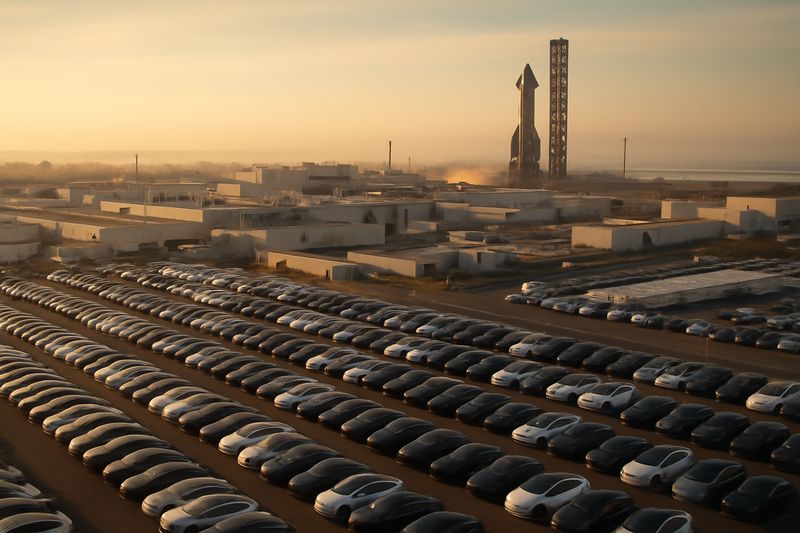
But here is the thing nobody on earnings Twitter could stop talking about: the SpaceX merger. On the Q2 call, Musk addressed the swirling speculation directly, pointing to growing collaboration between Tesla and SpaceX as evidence the two companies are increasingly intertwined. Deepwater Asset Management took that as its cue to raise the probability of a Tesla-SpaceX combination from 80% to 90%, a move that lit up sentiment trackers across YouTube and X. When one of the most-watched institutional voices on Tesla is basically pricing in a deal as near-certain, that tends to overshadow a bad margin quarter.
The bull case is obvious: SpaceX's valuation, brand, and technology suite would be transformative for Tesla's multiple. Cybercab production is ramping at Gigafactory Texas. Optimus robot production is scaling. If you believe Musk when he says current investments will yield the best capex returns Tesla has ever seen, you are essentially betting on a 2027 or 2028 payoff that makes today's margin pain irrelevant.
The bear case is equally clear. A 3.95% net margin at nearly $100 billion in revenue is not the profile of a company that can absorb a $25 billion capex year without consequences. EPS growth is already softening, and a merger with a private company of SpaceX's complexity introduces regulatory and structural risk that no probability estimate fully captures.
Meanwhile, $MU quietly won a major Tesla memory chip supply deal that sent Micron up 2.5% after hours, which is the kind of subplot that gets buried when the main character is busy announcing he might merge two of the most valuable companies he runs. Classic Elon, honestly.
BullApe's AI grades every pick against the S&P 500 - wins and misses published. See the track record →