Strait of Hormuz Is the Market's Biggest Risk Right Now
Geopolitical chaos in the Gulf is driving energy prices, safe-haven flows, and a full-blown macro rotation that Wall Street can't ignore
Ticker Ratings
If you've been watching index charts and wondering why market data looks weirdly blank this week, welcome to a moment where geopolitics completely hijacks the macro narrative. The Iran-US war and the Strait of Hormuz standoff have become the single most important variable in global markets right now, and the signals coming out of Bloomberg's coverage, YouTube finance creators, and breaking Reuters headlines all point in the same uncomfortable direction: nobody really knows how this ends, and that uncertainty is expensive.
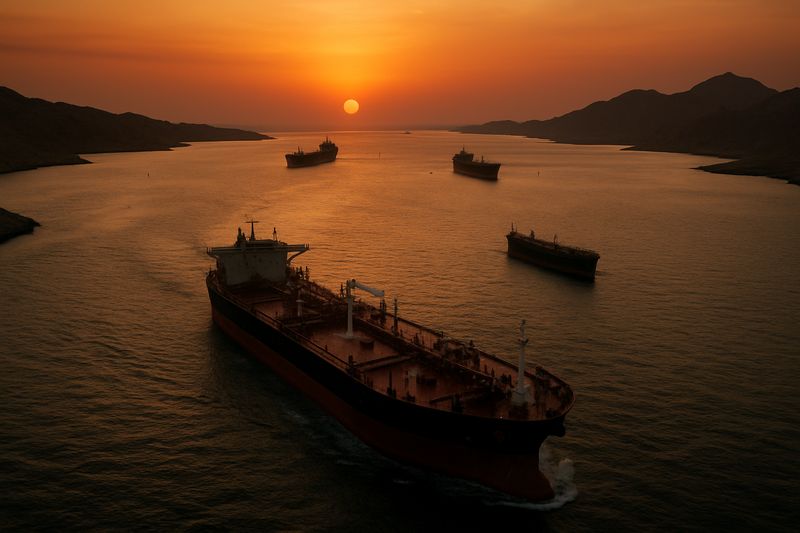
Here's the situation on the ground. Brent crude briefly punched above $83 per barrel after Iran threatened to bar US and Israeli ships from the Strait of Hormuz, a waterway that handles roughly 20% of global oil flow. European natural gas prices surged up to 10% across two consecutive sessions, sitting at roughly double their January levels, while Europe's gas reserves are at their lowest seasonal level since 2009. That's not a typo. Energy markets haven't looked this stressed in years, and the root cause is a diplomatic standoff with no clean exit. As Bloomberg's coverage noted, Trump is basically stuck in a war with no exit in sight, and the US has reportedly used virtually all of its long-range precision missiles.
The relief valve everyone is watching is a proposed Hormuz deal brokered through Oman. Iran wants inbound control of the strait plus outbound oversight, which is a negotiating position that would be a massive geopolitical win for Tehran. Analyst Paul Sankey of Sankey Research told Bloomberg that oil markets should pull back absent major new escalation, citing reduced US military activity and sufficient supply. That's the bull case for oil stabilizing. The bear case is Saudi Arabia is reportedly expecting an imminent two-pronged attack from Iran's allies, which would blow up any diplomatic progress faster than you can say $100 oil.
Meanwhile, the macro rotation playing out in the background is genuinely interesting. Gold is posting its best weekly performance since January, safe-haven flows are active, and companies with energy-adjacent exposure are seeing real volatility. Kingspan, the insulation and data center infrastructure specialist, surged as much as 15% this week after raising full-year guidance and reporting a backlog considerably higher than last year. It's a reminder that even in macro chaos, quality earnings momentum gets rewarded. On the other end, ConocoPhillips is in the middle of a CEO transition just as energy markets hit peak uncertainty, which is not ideal timing regardless of the Q2 beat.
The broader market setup heading into the rest of August: Tom Lee of Fundstrat is still calling for S&P 500 at 7,900 to 8,000 by month end, driven by earnings momentum and AI tailwinds. That target gets a lot harder to hit if a Saudi tanker goes down in the Gulf and crude spikes to $95. The market is essentially pricing in a peaceful Hormuz resolution. If that trade is wrong, the repricing will be fast and ugly.
Geopolitical risk is never priced correctly until it is, and by then it's too late to be clever about it.