The 'Stilts Economy': Two Pillars Holding Up 7,757 S&P 500
Social sentiment is buzzing about a two-pronged economy held up by AI spending and high-end consumers, while everyone else maxes out their credit cards
Ticker Ratings
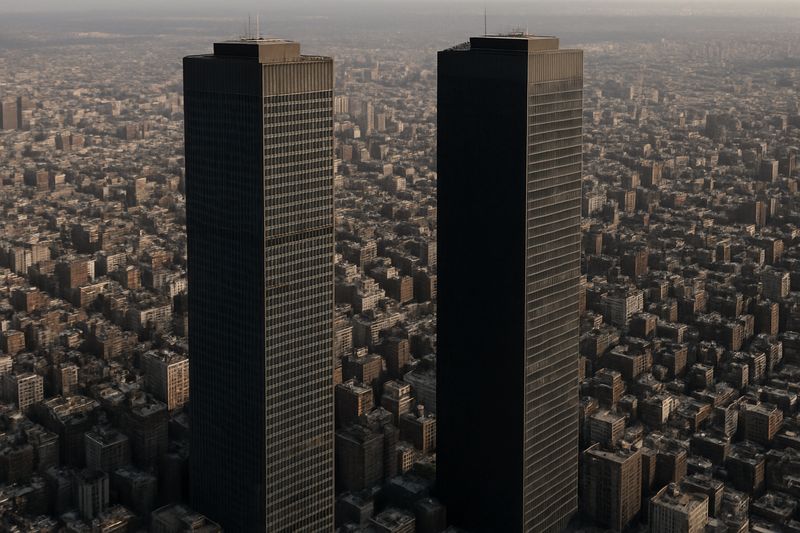
The S&P 500 closed at 7,757 on Wednesday, the Nasdaq rallied 1.05%, and the VIX sat at 16.68 like it had no idea there was an active naval conflict in the Strait of Hormuz. Markets are up, fear is down, and everything is fine. Except, per CNBC's commentary and a growing chorus across YouTube finance channels this week, the economy is basically a circus act balanced on two very thin stilts.
Stilt one: AI capital expenditure. Meta just dropped a record $64.2 billion quarter and bumped its full-year capex guidance to $135-145 billion. China is planning to spend $3.7 trillion on 6G networks, which is roughly 20% of its entire economy. The AI buildout is real, it is massive, and it is the single biggest driver of equity sentiment right now. CFR's Rebecca Patterson described AI as "too much of a good thing at the wrong time," crowding out capex in other sectors and pushing up labor costs. That is the kind of nuanced bear case that gets ignored during a Nasdaq rally but tends to age well.
Stilt two: wealthy consumers riding a portfolio wealth effect. High-end spending is holding up, but as the CNBC "Stilts Economy" segment made painfully clear, lower and middle-income consumers are borrowing on credit cards just to maintain their standard of living. The Nestle CEO confirmed it: US consumers are "stretched at the end of the month." Small business optimism fell to a three-month low in September. JPMorgan data shows only 30% of small business owners feel good about the broader economy, even though 60% are optimistic about their own shop. That gap is a tell.
Meanwhile, 10-year Treasury yields are holding at 5.15%, oil briefly touched $110 a barrel on Strait of Hormuz mine strikes, and Trump is publicly floating strikes on something called Pickaxe Mountain. Kuwait Petroleum is still shipping crude via ship-to-ship transfers but is down from 2.7 million to just over 2 million barrels per day. The Treasury's David Zervos called this an energy story masquerading as an inflation story, and he has a point. The Fed rate path has already shifted from 50bps of cuts to 50bps of hikes on the back of oil alone.
The semiconductor picture is also worth watching. The ChartGuys flagged a potential daily lower high forming on the Nasdaq, with memory and chip stocks still stuck near lows. Tesla cutting AI capex sent Asian robot and component stocks down as much as 12% overnight. If the AI capex stilt wobbles, the whole circus act gets a lot less entertaining.
At 7,757, the S&P 500 is priced for a soft landing, a peaceful Strait of Hormuz, and a consumer who definitely does not need a second credit card. At least one of those assumptions is already wrong.