Southwest $LUV Beats Earnings 500% YoY While American $AAL Bleeds Fuel Costs
Same sky, same fuel prices, completely different outcomes. Here is what the YouTube finance crowd is saying about the airline earnings divide.
Ticker Ratings
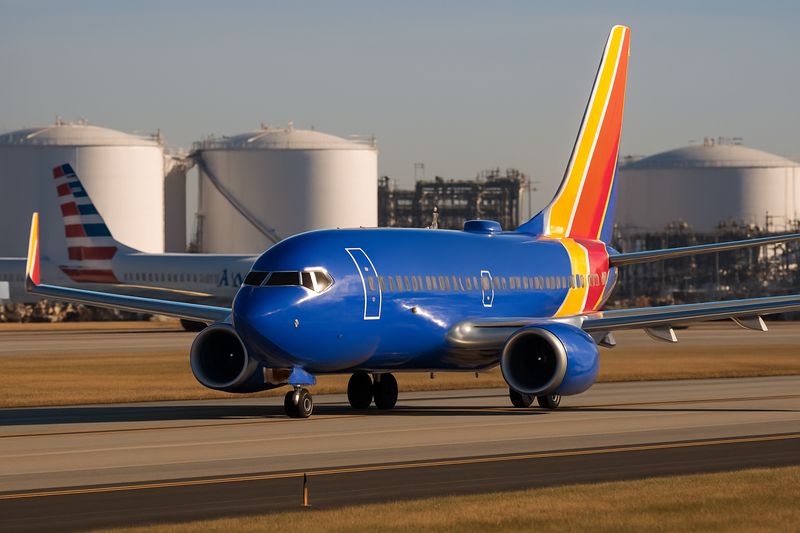
Two airlines. Same jet fuel market. Wildly different scorecards. While $AAL reported a wider-than-expected Q3 loss with fuel costs running $1.9 billion higher year over year, $LUV dropped a 500% earnings-per-share increase and expanded margins by nearly five percentage points. That is not a typo. Five. Full. Percentage. Points. CNBC coverage of both CEO interviews this week made it impossible to ignore the contrast.
Southwest CEO Bob Jordan was refreshingly blunt on camera: the airline is planning as if elevated fuel costs above $4 per gallon persist into 2027, and they are still growing. About 65% of Q4 bookings are already locked in with zero signs of consumer pullback, even as airfares have climbed 27% year over year. The kicker? Southwest also announced it will be the first airline to equip its full fleet with Starlink by roughly this time next year, per Bloomberg Podcasts coverage of CFO Tom Doxy's comments. Connectivity as a moat. Interesting bet.
American Airlines CEO Robert Isom, meanwhile, was in full damage-control mode. Fuel costs are projected to be $2.8 billion higher in Q4 alone, and full-year guidance now points to a deeper loss than previously forecast. Isom acknowledged American is running behind Delta and United on post-pandemic recovery. The stock still rose over 3% on the day because revenue growth impressed, which tells you everything about how low the bar was.
The bear case on airlines broadly is not subtle. $PG CFO Andre Schulten cited Brent crude near $112 per barrel as a structural headwind, and Bloomberg Markets data showed oil up nearly 2.75% in a single session on Houthi attacks in Saudi Arabia. Former Dallas Fed President Robert Kaplan argued on CNBC that oil-driven inflation is structural and monetary policy cannot easily fix it. That is a rough macro backdrop to be in the fuel-heavy business of flying people places.
The bull case on $LUV is real though. Margins expanding during a fuel shock is not luck, it is operational discipline. The Starlink rollout adds a genuine product differentiator at a time when American Airlines is just getting started with Starlink on select routes. And demand, per the CEO, is strong across leisure, business, all geographies. That is a clean story.
As for $AAL, capacity cuts are coming in 2025, the CEO said so directly. Sometimes the most honest thing a CEO can do is admit the near-term hurts and show a plan. The plan here involves chasing Delta and United's playbook, which is fine, but being third to copy a strategy has historically worked out about as well as arriving late to a Southwest gate.