RCAT and AVAV: 3 Drone Stocks Hiding in the $1.15T Defense Bill
Congress just passed the largest defense bill in US history, with a dedicated drone and battlefield AI section. Here are the obscure names cashing in.
Ticker Ratings
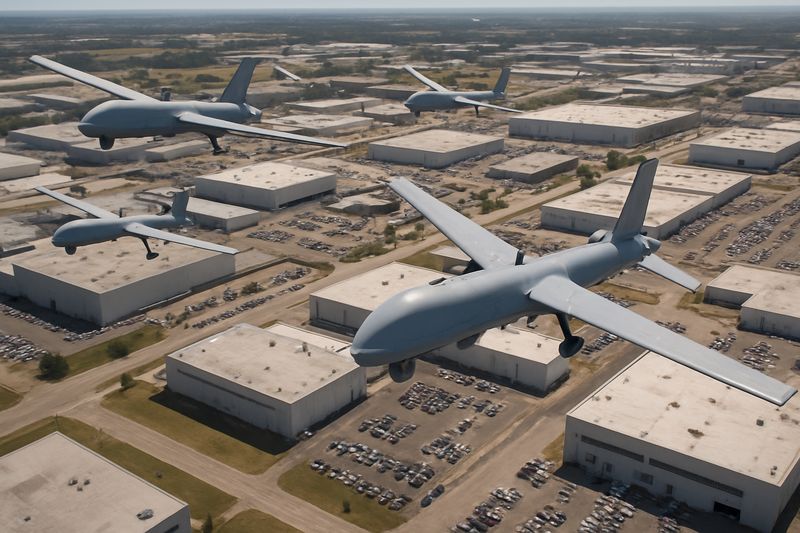
A YouTube deep-dive from Felix and Friends (Goat Academy) laid out the thesis bluntly: cheap drones costing thousands can destroy assets worth millions, and Congress just codified that reality into law. The $1.15 trillion defense authorization includes a dedicated section for drones, counter-drones, and battlefield AI. Three investment waves were identified: builders (attack drones), brains (AI autonomy), and blockers (counter-drone systems). We went digging for the overlooked names in each bucket.
$RCAT (Red Cat Holdings) is the closest thing to a pure-play small-cap drone builder on US exchanges. The Nevada-based company makes tactical drones for military and government customers, with its Black Widow and Teal drones already deployed by US Special Operations Forces. It sits well under a $500 million market cap, has almost zero mainstream financial media coverage, and trades on Nasdaq. The bull case: it's one of the few companies with actual fielded hardware, not just a pitch deck. The bear case: revenue is still small, the path to profitability is foggy, and defense procurement cycles are notoriously slow. The catalyst to watch is new contract awards tied directly to the drone section of the freshly passed bill.
$AVAV (AeroVironment) gets mentioned in the same breath but rarely gets its own headline. With a market cap around $4.5 billion, it technically qualifies as mid-cap, and it is still chronically under-covered relative to defense primes like Lockheed (which just posted a record $230 billion backlog and surged 6.6% on earnings). AVAV makes the Switchblade loitering munition, the kind of asymmetric weapon the Goat Academy video describes as the core of modern warfare. Unlike RCAT, AVAV is already profitable. The risk: valuation has crept up on the drone narrative, so you are not buying it cheap.
$KTOS (Kratos Defense and Security Solutions) is the third name, and arguably the most interesting for the AI-autonomous angle. Kratos builds unmanned combat aerial vehicles and has a hypersonic systems division, sitting at roughly $5 billion market cap on Nasdaq. It has stayed off most retail radar screens because its products are classified enough that quarterly earnings calls are light on details. That opacity cuts both ways: you do not know exactly what contracts are coming, but neither does anyone else, which is where hidden-gem upside lives.
All three sit in a niche that is about to get a firehose of government money pointed at it, in a world where Lockheed's $230 billion backlog shows the defense procurement machine is running hot. The question is which of these smaller names can actually execute at scale before a larger prime acquires them or outcompetes them entirely. That is the bet.
BullApe's AI grades every pick against the S&P 500 - wins and misses published. See the track record →