Nasdaq's Worst Month Since 2025: What YouTube's Top Analysts Are Saying
From Intel's 30% cliff dive to the I Bond's best fixed rate since 2006, here's what finance YouTube can't stop talking about
Ticker Ratings
| Ticker | Rating | Entry Price | Current | $ Gain | % Gain |
|---|---|---|---|---|---|
| INTC INTEL CORP | sell | $64.89 | - | - | - |
| AMZN AMAZON COM INC | hold | $240.80 | - | - | - |
| NVDA NVIDIA CORP | hold | $205.25 | - | - | - |
| ICE Intercontinental Exchange, Inc. | buy | $168.50 | - | - | - |
| AAPL Apple Inc. | hold | $345.10 | - | - | - |
| PLTR Palantir Technologies Inc. | buy | $184.56 | - | - | - |
| RBLX Roblox Corp | hold | $43.19 | - | - | - |
| TTWO TAKE TWO INTERACTIVE SOFTWARE INC | buy | $191.20 | - | - | - |
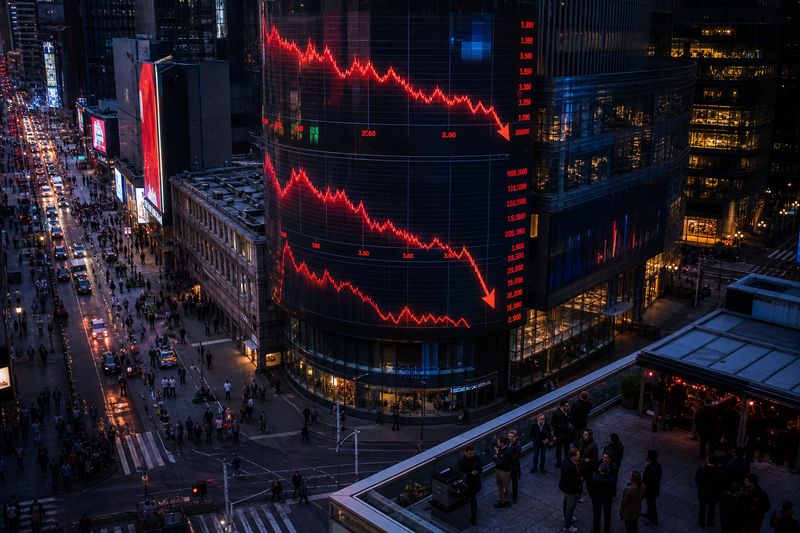
October 2026 handed the market a report card and it was not pretty. The Nasdaq 100 fell 6.6% for the month, its worst performance since March 2025, while the S&P 500 dropped roughly 1% in October with a particularly brutal single day of -1.8% that broke the index below its 100-day moving average. Finance YouTube spent the week processing the carnage, and for once, the Bloomberg crowd and the independent creators mostly agree: the AI trade is not dead, but it is being aggressively repriced.
The consensus villain of the week is $INTC, which posted its worst single-day drop since 1974, plunging roughly 29-30% after adjusted EPS of $0.25 missed the $0.43 consensus. Bloomberg's Stock Movers coverage called it Intel's worst week in four decades, while CNBC's Jim Cramer warned the selloff may not be over. The root cause, per multiple Bloomberg Podcasts breakdowns, is not just weak PC demand but a supply chain squeeze where AI developers are competing for the same memory components Intel needs for its traditional hardware business. That is a structural problem, not a one-quarter miss. Meanwhile, $AMZN fell around 2-4% on higher-than-expected capex, though AWS guided to roughly 40% growth through 2028, which helped shares recover from an early 6% intraday drop.
Where creators diverge is on what this all means for the broader market. Fundstrat's Tom Lee, appearing on CNBC, called the selloff a forced institutional liquidation event rather than a fundamental breakdown, pointing to the equal-weight S&P holding up intraday as evidence. Wharton's Jeremy Siegel pushed back on the panic narrative entirely, noting the Nasdaq was only down 9% from its all-time high set less than a month ago. The Investor's Business Daily channel, however, is watching for a technical confirmation: a follow-through day signal, with eyes on whether the Nasdaq slices through its 200-day moving average without support. If it does, IBD's analyst expects the SPY to follow it down there too.
Two themes outside the AI selloff are getting underplayed. First, I Bonds just got interesting again: the US Treasury announced a new composite rate of 5.51%, with a fixed component of 1.40%, the highest since 2006, topping high-yield savings accounts at 4.50% and T-bills ranging from 3.98% to 4.42%. For boring-but-smart money, that is a real option. Second, $ICE is having a week nobody expected, surging over 9% in two days after a Q3 EPS beat and a partnership with crypto platform Trade XYZ to bring regulated perpetual futures to US markets, with Stan Druckenmiller also investing. CEO Jeff Sprecher called the broader pullback a normal retrenchment in a long-term bull market, which is either calm wisdom or suspiciously convenient timing depending on your priors.
The VIX told the most interesting story of the week: it spiked to 24-25 intraday before closing at 19.4, meaning the market swallowed a lot of volatility by the bell. Defensive sectors did the heavy lifting, with consumer staples up nearly 11% in October and healthcare near record highs. Cramer is rotating there. Siegel is not panicking. And Howard Marks, in a rare CNBC appearance, described AI as the least predictable phenomenon of his career, recommending against concentrated bets until the fog clears. Three different answers, same data set. Welcome to October.
The next two catalysts, Apple earnings and the October jobs report (Bloomberg Economics forecasting just 26,000 new payrolls, well below the 50,000 needed to keep unemployment steady), will either confirm that this was a healthy reset or open a much more uncomfortable conversation about what the AI infrastructure buildout is actually worth.