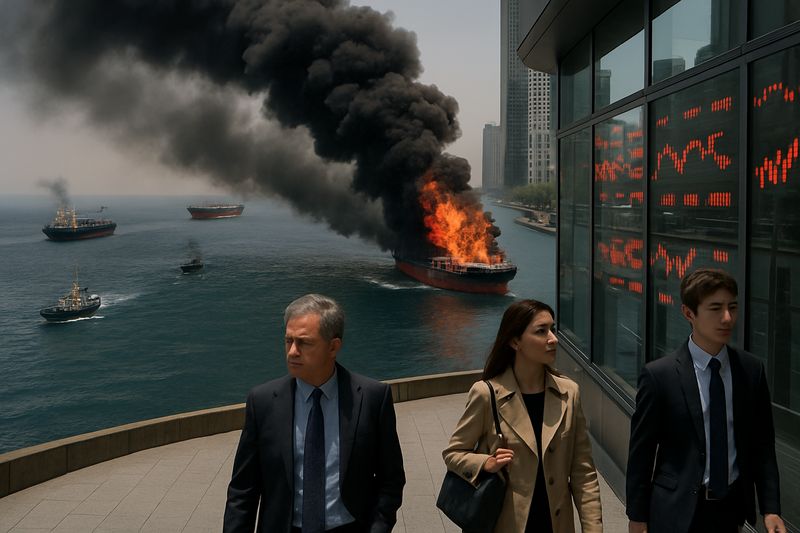
Markets Shrug Off Iran War: VIX at 15 While Hormuz Burns
Tanker attacks at 2026 highs, 10-year yields at 5.22%, and the S&P 500 is basically vibing. Here's what the sentiment data actually says.
Ticker Ratings
Let's do a quick vibe check on this market. Houthi missiles are hitting Riyadh's airport, Iran is threatening to physically block the Strait of Hormuz, tanker attacks just hit their highest weekly count since the Iran war started, and the S&P 500 closed Friday at 7,811.54, up 0.59% on the day. The VIX is chilling at 15.41. Fifteen. This market has the emotional range of a golden retriever on a sunny afternoon.
The week told a choppy but ultimately bullish story. The Dow led the pack with a +0.83% close on October 9th, while the Nasdaq gave back some ground mid-week (down 1.25% on October 8th) before recovering to close up 0.64%. That Nasdaq wobble is worth watching. Investors Business Daily's YouTube content flagged the same friction: active traders are getting whipsawed by setups that look great and then immediately get "whacked," and the recommendation from their analysts is to lean harder into $QQQ and $SPY rather than single-name bets until the chop clears. Relatable, honestly.
The one signal actually worth paying attention to is the 10-year Treasury yield dropping to 5.22%, its sharpest single-day move of the week at -1.14%. Bonds rallying while equities rally too is either a sign that the market thinks the Fed is about to blink, or that someone in a very expensive suit is hedging quietly while retail stays risk-on. Either way, the bond market is not confirming the equity market's confidence, and that divergence deserves respect.
The macro backdrop reads like a geopolitical thriller someone optioned for a prestige TV series. Trump is pausing Iran strikes until after the midterms, VP Vance is demanding Iran cut nuclear enrichment, Russia is now supplying diesel to US markets (with at least one analyst on YouTube raising the very spicy question of whether Iranian diesel is being laundered through Russian supply chains), and Asia is stockpiling oil like it's 2020 and the product is toilet paper. Shell is reporting record refining margins. The US EIA has hiked oil price forecasts again. Energy is the one sector where the geopolitical premium is actually showing up in fundamentals, not just headlines.
The Bloomberg Podcasts segment on midterm dynamics added important context: high diesel and gas prices are the number one domestic concern for voters heading into November, and analysts are openly skeptical that the Russian diesel deal moves the needle fast enough to matter electorally. Meanwhile, the survival bunker story from that same feed (575 concrete bunkers in South Dakota, $55,000 for a 99-year lease) is either a quirky aside or the most honest market sentiment indicator of the week, depending on your priors.
The market is pricing in resilience. The bond market is pricing in uncertainty. One of them is going to be very embarrassed in about six weeks.