Iran's Hormuz Gambit: Life Insurance Giants Are Exposed
Iran keeps the Strait shut, bond investors revolt, and it turns out your whole life policy may be deeper in this mess than you think
Ticker Ratings
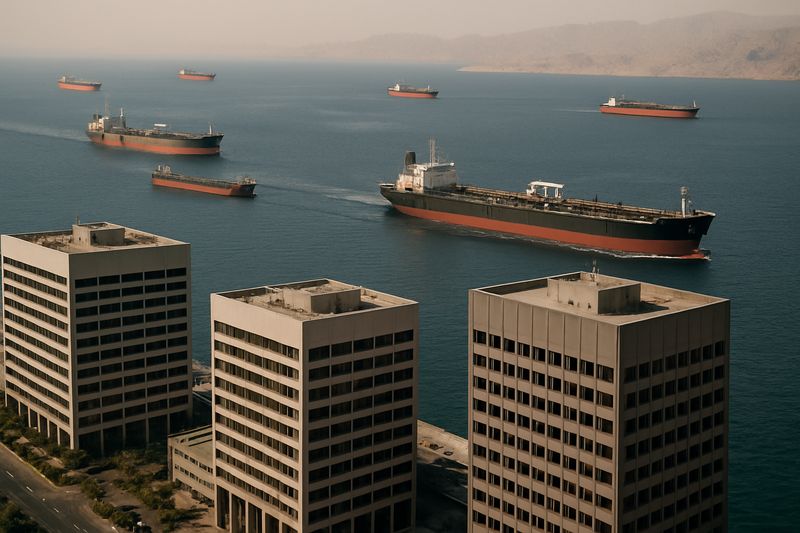
Iran just told the world the Strait of Hormuz stays closed until the U.S. meets interim deal conditions, and the market is starting to connect dots it really did not want to connect. Oil prices are climbing on Middle East supply concerns. Bond investors are in open revolt. And somewhere in this mess, your life insurance policy is quietly doing something you never signed up for.
A recent Andrei Jikh video on YouTube broke down exactly how life insurers work: they collect your premiums, invest the float, and keep the upside. You get a fixed payout. They get the alpha. That asymmetry is fine when yields are boring and credit spreads are tight. It is considerably less fine when Treasury Secretary Bessent is threatening the toughest-ever sanctions on Iran while simultaneously trying to stabilize a bond market that economists are calling his intervention an arrogant overreach into. PIMCO's Tony Krizanzie pegged fair value on 10-year Treasuries at roughly 4% to 4.5%, with term premium at about 1% and the real neutral rate around 1% above inflation. If that floor breaks higher on a prolonged Hormuz closure and oil spike, the fixed-income portfolios backing your whole-life policy get ugly fast.
The geopolitical tape is not subtle right now. Trump has threatened to bomb Oman. The UAE confirmed two missiles launched from Iran. Bloomberg's Jackson Hole preview notes Kevin Warsh is walking into the most fraught Fed speech since 2007, with inflation still the top voter concern and Bessent reportedly juggling two simultaneous plans: one for Iran sanctions and one for bond market stability. That is a lot of plates to spin while oil gains on every Middle East headline.
Private equity firms, which have aggressively moved into life insurance ownership over the last decade, make the exposure circular. They manage the float, they chase yield in illiquid credit, and they are the ones who absorb losses first. Until they cannot. The Jikh video's core point stands: policyholders do not share the upside, but they do eventually absorb the catastrophic downside if the insurer cannot pay claims. A prolonged Gulf war energy crisis, per Reuters, is described as just getting started.
The trade here is not complicated: energy stays bid, bonds stay volatile, and any financial institution with a fixed-liability structure and a yield-chasing asset portfolio deserves a hard second look. The Strait closing is not a tail risk anymore. It is the current reality, and the bond market revolt is the market screaming that nobody priced this correctly.
Sometimes the most dangerous thing in your portfolio is the thing you thought was the safe part.