Hormuz Tankers Ablaze: Oil Stocks to Watch as Strait Burns
Four tankers hit by mines, US missiles flying, and social sentiment is oscillating between panic and opportunism in real time
Ticker Ratings
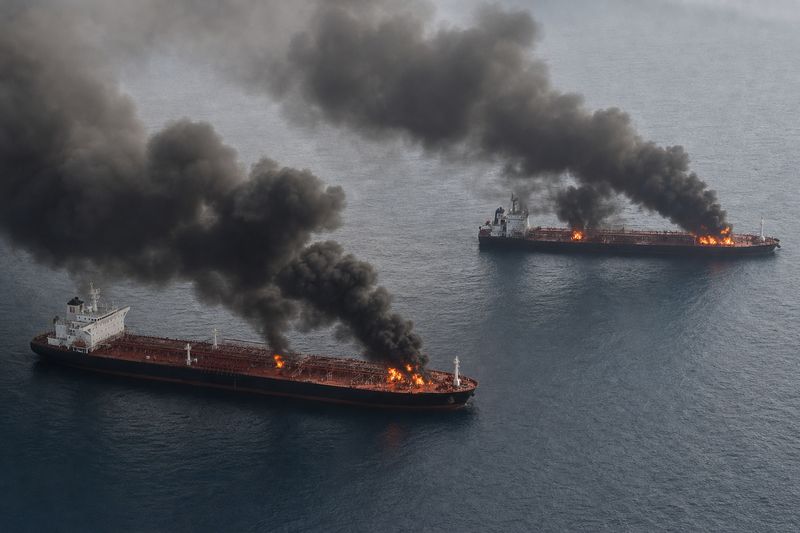
Four tankers are ablaze near the Strait of Hormuz. US forces just carried out what officials are calling "defensive" strikes on Iran's Qeshm Island. And the VIX just printed a 69.66% single-day surge to 28.18, which is the market's way of saying it needs a paper bag to breathe into. This is not a drill.
The S&P 500 dropped 4.36% on November 5th, its worst single-day performance in this stretch, while 10-year Treasury yields fell to 4.84% as the classic flight-to-safety trade kicked in. Traders ran to bonds, gold had its moment (again), and energy stocks became the most interesting dinner party conversation in finance. The Nasdaq managed a modest 1.09% bounce on November 6th, but nobody is fooled: that's not a recovery rally, that's a dead cat with good PR.
Social sentiment on X is split into two loud camps right now. Camp One is convinced this is a full escalation spiral and is loading up on energy names and defense plays. Camp Two thinks the "defensive strike" framing is diplomatic cover for a de-escalation path, pointing to the Democrats' midterm sweep and the Reuters headline noting oil actually fell on "Iran war uncertainty" after the vote. That second camp is smaller but arguably more interesting.
The Hormuz angle is the one that keeps energy traders up at night for good reason. Roughly 20% of the world's traded oil passes through that strait. With four tankers already hit by mines and Iran's IRGC confirming fires on two more plus a tugboat, the chokepoint risk is real and priced in only partially. Emirates airline's net profit dropping 66% in its first half shows the regional economic blast radius is already spreading well beyond crude.
On YouTube, Fundstrat's crew is making an interesting parallel: they're comparing today's AI giants to Netscape and Cisco during the dot-com boom, arguing the real winners show up later. That framing is oddly relevant here too. The energy companies that figure out Hormuz-resilient supply chains quietly, while everyone else watches missiles on Reuters livestreams, might be the ones writing the best earnings calls in 2027.
The most dangerous trade right now is assuming this resolves cleanly. Pete Hegseth is literally vowing to "keep fighting" from the Pentagon podium, and Stephen Miller just became White House Chief of Staff. The adults are not, in fact, in the room.
BullApe's AI grades every pick against the S&P 500 - wins and misses published. See the track record →