Hormuz Strait Stays Shut: What the Iran War Means for Oil
Iran says the strait stays closed until Washington meets interim deal conditions, and traders are already feeling the squeeze at the pump
Ticker Ratings
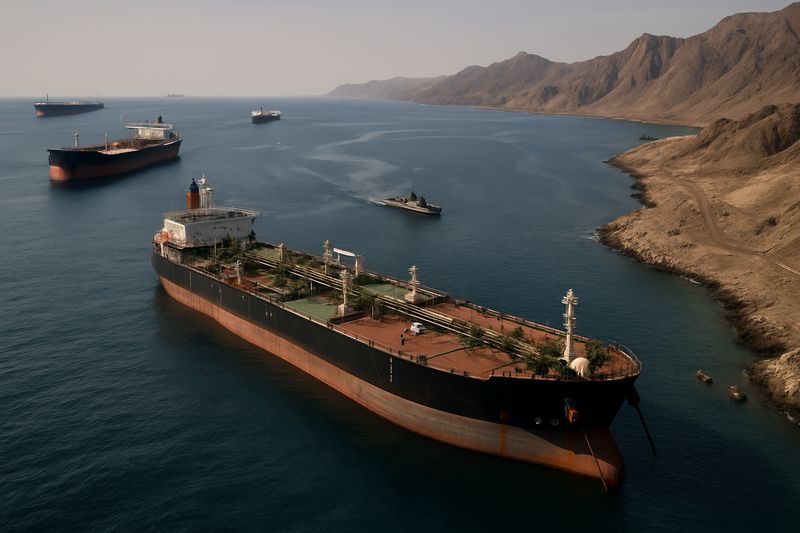
The Strait of Hormuz is closed, Iran isn't budging, and the US-Iran war just became the dominant market story of the moment. Iran has made its position crystal clear: the strait stays shut until Washington meets interim deal conditions. Trump's response? No talks planned, threats to bomb Oman, and a call for Iran to "surrender." This is not a de-escalation situation.
The market impact is already brutal in one corner: energy. Diesel hit an all-time high of $5.85 per gallon, driven by refinery capacity constraints colliding head-on with Middle East supply disruptions. Oil prices are gaining steadily on what Reuters calls "Middle East supply concerns amid impasse in US-Iran war." The UAE reporting two missiles launched from Iran earlier this week adds a kinetic dimension that traders cannot ignore. About 20% of global oil supply transits the Strait of Hormuz, and right now that spigot is off.
Social sentiment is predictably split. Energy bulls are loading up on oil-adjacent names, treating every dip as a gift. Bears are pointing out that a protracted shutdown could tip an already stressed consumer economy into outright recession, especially with the August jobs number coming in at a softer-than-expected 162,000 payrolls and Moody's Mark Zandi arguing that the real underlying pace is closer to 150,000 per month once seasonal noise is stripped out. A Huntington Beach moving company owner described business conditions as the worst he has ever seen, which is the kind of ground-level data point that lives rent-free in your head.
Treasury Secretary Bessent has announced the US will impose "toughest ever" sanctions on Iran and is urging China to cooperate. China cooperating with US sanctions on Iranian oil is roughly as likely as your cat cooperating with bath time. Bond investors are already in revolt, per Reuters, with yields rising as the fiscal cost of a Middle East conflict stacks on top of an already uncomfortable debt picture. The two-year Treasury note hit its highest level since last year on Friday, boxing in Fed Chair Kevin Worsh ahead of critical CPI and PPI prints next week.
The bull case for oil is straightforward: the strait stays shut, supply stays constrained, prices stay elevated, and energy stocks print. The bear case is that a prolonged conflict collapses demand faster than it cuts supply, or that some diplomatic back-channel opens and oil craters overnight. With Trump threatening to bomb Oman and Iran calling his bluff, the back-channel scenario is not exactly crowded right now.
When diesel breaks all-time records and the world's most critical oil chokepoint is physically closed, the energy crisis is not "just getting started" as one Reuters headline put it. It's already arrived, and the stock market hasn't fully priced that in yet.