Hormuz Stays Shut: The Iran Crisis Stocks You Need to Watch Now
With no US-Iran talks on the horizon and oil supply routes in limbo, traders are hunting for winners beyond the obvious crude plays
Ticker Ratings
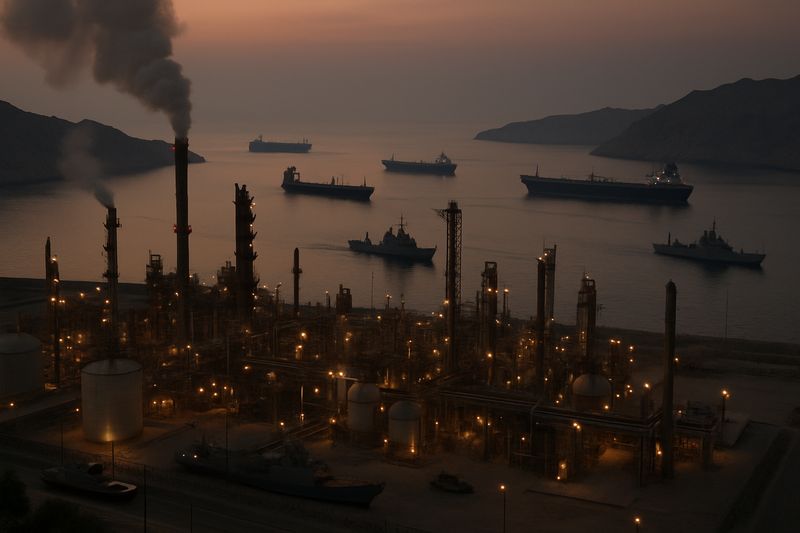
Let's be honest: the Strait of Hormuz situation just went from 'geopolitical noise' to 'full-blown market event.' Iran has made it official, Hormuz remains closed until the US meets interim deal conditions, and according to Reuters, Trump has responded by threatening to bomb Oman and declaring there are no talks planned. Cool, normal stuff.
The news flow hitting social sentiment trackers right now is relentless. The top five impact-scored stories from the last few hours are all variations of the same terrifying theme: oil supply through the world's most critical chokepoint is offline, no diplomatic off-ramp is visible, and bond investors are described in one Reuters headline as being 'in revolt.' The UAE confirming two Iranian-launched missiles detected earlier did not exactly calm the room.
Oil is gaining on supply concerns, per Reuters, and the Iran energy crisis is described as 'just getting started.' That framing matters for how you position. This isn't a one-day spike story. The Congressman Raja Krishnamoorthi, in a Bloomberg Podcast appearance, flagged the very real risk of gasoline hitting $5 per gallon and noted that US Patriot, THAAD, and SM-3 missile inventories are being drawn down in ways that reduce deterrence elsewhere. That's a broader strategic risk the market hasn't fully priced.
Meanwhile, Treasury Secretary Bessent says the US will impose the toughest-ever sanctions on Iran and is urging China to cooperate. China cooperating on Iran sanctions is, historically speaking, a lot to ask. If Beijing doesn't play ball, the supply crunch extends further and oil bulls have a longer runway.
On the Venezuela side, a separate Bloomberg segment this weekend highlighted the US-Venezuela oil deal as potentially adding 65 billion barrels of oil under US influence, with Chevron, Exxon, and Halliburton named as likely big infrastructure investors. That deal suddenly looks a lot more strategically important when Hormuz is closed. Diversifying supply routes away from the Persian Gulf is no longer optional geopolitics, it's survival math.
The G20 Digital Innovation Meeting in North Carolina has tech royalty like Jensen Huang, Sam Altman, and Elon Musk in the building, but Philip Locke of CSIS bluntly noted that G20 partners and the US are talking past each other, with partners fixated on the Iran war while the US wants to push AI. That gap in priorities is itself a risk asset, because coordinated global response to this crisis is not currently in the cards.
The Hormuz closure isn't a tail risk anymore. It's the base case, and every day it stays shut is another day the energy trade gets more crowded, more volatile, and more interesting for those who got there early.