Hormuz Mines Hit Two Tankers: Oil Surges as Iran War Escalates
Two tankers struck by mines, Trump floats the 'mother of all bombs,' and the Fed is back to thinking about rate hikes. Just a chill Friday.
Ticker Ratings
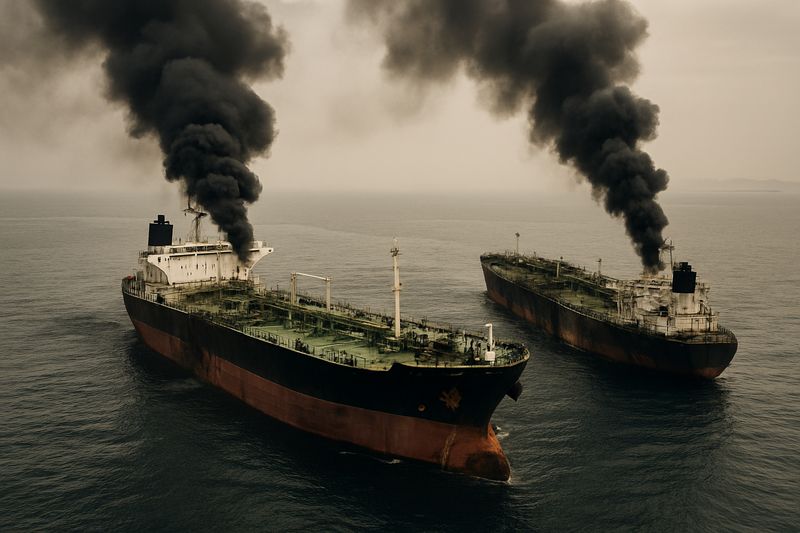
If you thought last week was spicy, buckle up. Iran's Revolutionary Guards confirmed that two tankers were struck by mines in the Strait of Hormuz, and the market reacted about as calmly as you'd expect: oil prices surged, the S&P 500 dropped 1.09% on Friday to close at 7,659, and the VIX, which had been flirting with complacency at 14.84 just a week ago, is now creeping back toward 17. The vibe on social media right now is equal parts panic and opportunism, which is pretty much the standard trader cocktail.
The geopolitical situation is genuinely alarming. Reuters is reporting that Iran's precision strikes have "picked apart Gulf infrastructure" and blunted U.S. war plans, while Houthi threats against Saudi Arabia are rattling Gulf bourses separately. The U.S. is now reportedly weighing whether to deploy the "mother of all bombs" in potential future strikes on Iran, and Trump mentioned something about hitting "Pickaxe Mountain." The U.S. has also moved to solicit the release of up to 17 million barrels from the Strategic Petroleum Reserve to cushion any supply shock. That number sounds big until you realize global consumption is roughly 100 million barrels per day. So, a few hours of coverage, basically.
Energy bulls are having a moment. TotalEnergies flagged a quarterly profit surge directly tied to the Iran war driving energy prices higher. That is not a subtle data point. On Bloomberg Podcasts, analysts noted that the oil long view is darkening as the conflict "refuses to end," which is a very polite way of saying nobody has any idea when this stops. The UN is now flagging that Hormuz shipping disruptions are starting to hit harvests globally, adding a food inflation layer on top of an already ugly inflation print: U.S. inflation heated up in September, putting a Fed rate hike at the October 28 FOMC meeting back on the table, per Reuters.
Here is the one silver lining, and it is genuinely interesting. The 10-year Treasury yield dropped to 5.1%, down 1.73% on the week. That move suggests bond markets think either growth is cracking or the Fed will ultimately blink. Meanwhile, JPMorgan's Bob Michele told Bloomberg that investment grade bond yields above 6% represent a healthy, attractive environment and that local emerging market debt (think Mexico, Brazil, Poland) is yielding close to 9% nominally. In a world on fire, fixed income is quietly becoming interesting again.
The Nasdaq managed a microscopic +0.08% on Thursday, clinging to tech's reputation as the one adult in the room. But with inflation hot, the Fed potentially hiking, and a war disrupting a chokepoint that handles roughly 20% of global oil supply, calling this a stable environment would be generous. Sentiment on X is split between energy traders doing victory laps and everyone else quietly googling "how does a mine actually hit a tanker."
The Strait of Hormuz has broken markets before, and the market is pricing in the possibility that this time is not so different.
BullApe's AI grades every pick against the S&P 500 - wins and misses published. See the track record →