Gold Repatriation and Bond Revolts: The Dollar's Slow-Motion Crisis
From gold repatriation to bond investor revolts, the global monetary order is quietly being renegotiated without America's permission
Ticker Ratings
| Ticker | Rating | Entry Price | Current | $ Gain | % Gain |
|---|---|---|---|---|---|
| GLD SPDR GOLD TRUST | buy | $406.77 | - | - | - |
Let's play a game. Imagine your most reliable business partner quietly starts moving their valuables out of your storage facility, stops lending you money at favorable rates, and begins publicly questioning whether you're trustworthy. That's not a hypothetical. That's what's happening to the U.S. dollar right now, in real time, and most people are watching Iran headlines instead of noticing.
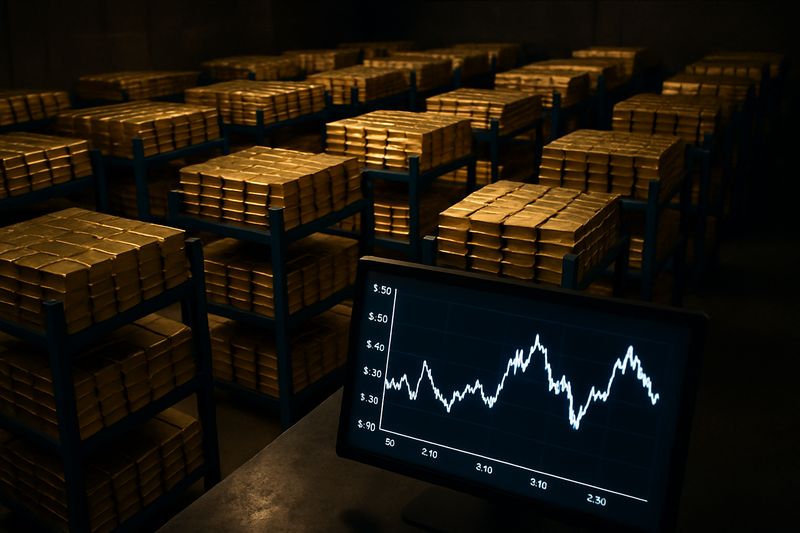
The signal that should be keeping Treasury secretaries up at night: Germany, France, and the Netherlands have all physically repatriated hundreds of tons of gold from U.S. Federal Reserve vaults. According to a recent Economist-adjacent deep dive flagged across financial YouTube, this mirrors the exact chain of events that preceded Nixon closing the gold window in 1971. History doesn't repeat, but it does apparently have a very recognizable ringtone. Meanwhile, Norway's sovereign wealth fund, the world's largest at $2.3 trillion, has proposed slashing roughly $80 billion in U.S. Treasury holdings. Norway. The country famous for its mild, consensus-driven governance is staging a bond revolt. When the Scandinavians are worried, you should probably be worried.
Layer on top of that: Gulf States and Japan are also stepping back from U.S. Treasuries, and Reuters is literally running headlines about a "bond investor revolt" as Iran threatens to go fully offensive and the Strait of Hormuz stays shut. The 10-year Treasury yield data may be temporarily unavailable in our feeds today, but the directional pressure is not a mystery. More sellers, same buyers, yields go up, bond prices go down. Basic math, painful implications.
So what does this mean for your portfolio? A few things worth watching closely. $GLD remains the most direct expression of this thesis, though it's already had a significant run. The real rotation opportunity may be in miners and royalty companies that haven't kept pace with spot gold. On the flip side, anything duration-sensitive, think long-dated bond funds, rate-sensitive utilities, and high-multiple growth names, faces a headwind if the bond market continues its tantrum.
- Central bank gold repatriation signals eroding institutional trust in U.S. asset custody
- Norway's proposed $80B Treasury cut is a canary in the coalition that funds America's deficits
- Elevated oil prices from the Hormuz closure add inflationary pressure exactly when the Fed needs flexibility
- The Hormuz shutdown is a near-term shock; the dollar's structural erosion is the slow burn underneath it
The Iran crisis is dominating the feed, and yes, it matters. But the bigger story is that the financial architecture built around American reliability is showing cracks that predate any single geopolitical event. The Hormuz closure is a headline. The gold repatriation is a memo. Smart money reads the memo.
BullApe's AI grades every pick against the S&P 500 - wins and misses published. See the track record →
Mentioned: $GLD