Fed Hikes to 3.75%-4%: Is Warsh Breaking the Market?
The Fed went hawkish, the S&P dropped, and social sentiment is split between panic and dip-buying. Here's what the noise actually means.
Ticker Ratings
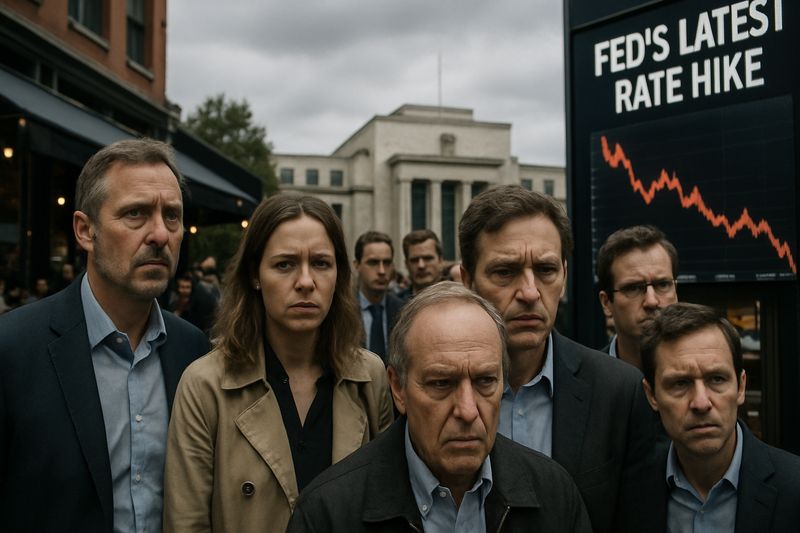
Kevin Warsh just made his inflation-fighting credentials very clear, and Wall Street is not thrilled about it. The Federal Reserve raised its benchmark rate by 25 basis points to a range of 3.75% to 4% in a unanimous 12-0 vote, and the reaction was about as warm as a rate hike in September usually gets. The S&P 500 dropped nearly 1%, the two-year yield jumped 7 basis points to 4.73%, and the dollar surged 2.8 standard deviations on the DXY. Fun times.
The headline number is uncomfortable enough, but the real gut-punch is buried in the projections. The Fed's updated dot plot shows core PCE at 3.4% for 2026, the headline PCE forecast sits at 3.7% for the current year, and the committee's own median projection now pushes the 2% inflation target out to 2029. That's not a typo. Three more years. Warsh was careful to note that projection belongs to his colleagues, not him personally, which is either reassuring or deeply ominous depending on your mood.
YouTube's financial corner is doing what it does best: splitting into two loud camps. Tom Lee of Fundstrat (via CNBC) is calling this an overreaction and saying 25-50 basis points won't topple the economy, pointing to Goldman Sachs estimates of nearly 100 basis points of inflation subtraction coming over the next six months from fading temporary effects. On the other side, Bloomberg's panel is citing the Fed raising its neutral rate estimate to 3.2% from 3.1% as a signal that higher-for-longer isn't a phase, it's the new normal, partly driven by AI investment supercharging capital spending.
Layered on top of all this is a geopolitical backdrop that is genuinely making things worse. The 10-year Treasury yield is hovering just under 5%, a level that historically spooks equity markets, while Houthi attacks on Saudi infrastructure and ongoing Hormuz disruptions keep an oil-driven inflation wildcard in play. The VIX sits at 17.2, which sounds calm until you remember it was at 15.84 just four days ago. The market is quietly getting more nervous, even if it's not screaming about it yet.
The AI bubble conversation adds another wrinkle. Andrei Jikh's viral breakdown notes that SpaceX, OpenAI, and Anthropic's combined projected IPO fundraising could match all 300 dot-com IPOs from 2000 adjusted for inflation, and historically, peak public excitement around owning a hyped company lines up suspiciously well with market cycle tops. The Fed hiking into that kind of frothy sentiment is either exactly the right medicine or the pin that finds the balloon.
If Warsh is right that inflation is "too high and has been for too long," then more hikes are coming and the S&P 500's recent slide toward 7,585 is just the opening act. If Tom Lee is right and core PCE drops to a "two handle" by early 2027, then the dip-buyers eating this move are going to look very smart. The data will decide, not the vibes, but right now the vibes are doing a lot of heavy lifting.
BullApe's AI grades every pick against the S&P 500 - wins and misses published. See the track record →