Fed Hawks vs. Doves: Jackson Hole 2026 Has Two Very Different Scripts
Cleveland's Hammack is calling for immediate rate action. Former Minneapolis Fed chief Stern says slow down. Here's who YouTube's top finance voices are siding with.
Ticker Ratings
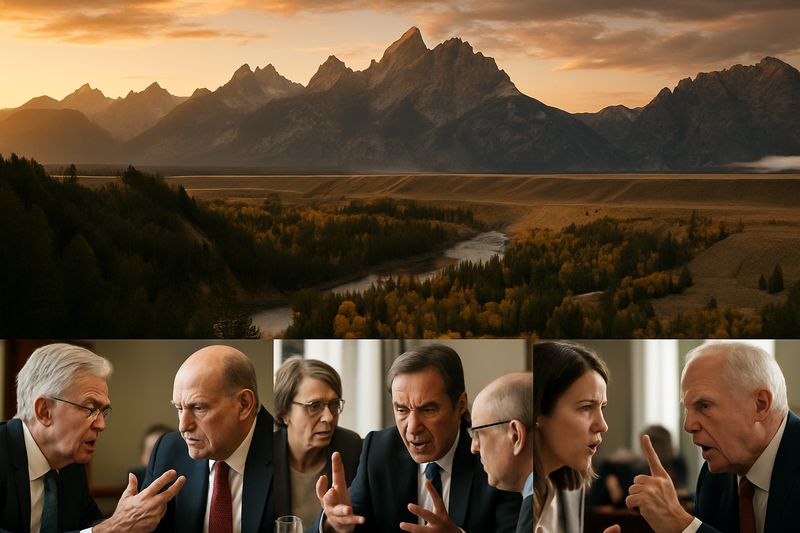
The annual Fed gathering in Jackson Hole is supposed to be a serene academic retreat in the Wyoming mountains. This year it reads more like a group chat where two people are actively fighting and everyone else is anxiously watching. Cleveland Fed President Beth Hammack came out swinging on CNBC, declaring that 'now is the time to act' on rate hikes, citing inflation running above the 2% target for more than five years and financial conditions she describes as genuinely loose. Businesses are borrowing freely, raising capital without breaking a sweat, and apparently nobody is feeling any policy pain. Her nowcast has PCE annualizing at roughly 3%, and she is done being patient about it.
On the other side of the room sits former Minneapolis Fed President Gary Stern, also on CNBC, who expects incoming Chairman Warsh to reaffirm the 2% inflation commitment at Jackson Hole without actually pulling any triggers. Stern's read is that inflation expectations remain well-anchored, and that buys you time. He does flag two genuine upside risks worth watching: geopolitical conflict involving Iran pushing energy and commodity prices higher, and ongoing tariff pressure keeping goods inflation stickier than models predict. Both guests are talking about the same economy and somehow landing in completely different zip codes.
Meanwhile, over at Bloomberg's Jackson Hole live coverage, the conversation is a little more structural. Bloomberg reporters note that current yield levels are not yet alarming because they have not pushed against the unusually high nominal GDP figures of 5 to 7 percent the US economy has been printing. Kansas City Fed President Jeff Schmidt, who sat down with Bloomberg's Odd Lots team, is the rare official sounding genuinely upbeat, pointing to unemployment falling from 4.3% to 4.1% and growth running between 2% and 3.5%. He views AI and the data center buildout as structural growth drivers, not a sugar rush, which is a notably more optimistic framing than what you hear from the rate-hike camp.
The creator consensus, if you can call it that, breaks down along familiar fault lines. Macro-focused CNBC voices are more hawkish, Bloomberg podcasts are more nuanced and market-structure oriented, and nobody is quite sure what Warsh will actually say. Bloomberg analysts noted that Treasuries look vulnerable to another vague speech, which is perhaps the most honest preview available.
The Bloomberg Surveillance team adds one more wrinkle: with US debt at $40 trillion and a 128% debt-to-GDP ratio, the bond market is currently absorbing everything, but that math gets worse every quarter rates stay elevated. Hammack wants to hike into a debt-heavy economy. Stern wants to watch and wait. Warsh gets to decide which of them looks smart by end of day.
If the Fed chair walks out of Jackson Hole with something genuinely committal, the Treasury market is going to have a very loud opinion about it very quickly.