ECB Hikes Rates as Iran War Pushes Inflation to Breaking Point
The European Central Bank just piled onto a market already drowning in geopolitical risk, and traders are not happy about it
Ticker Ratings
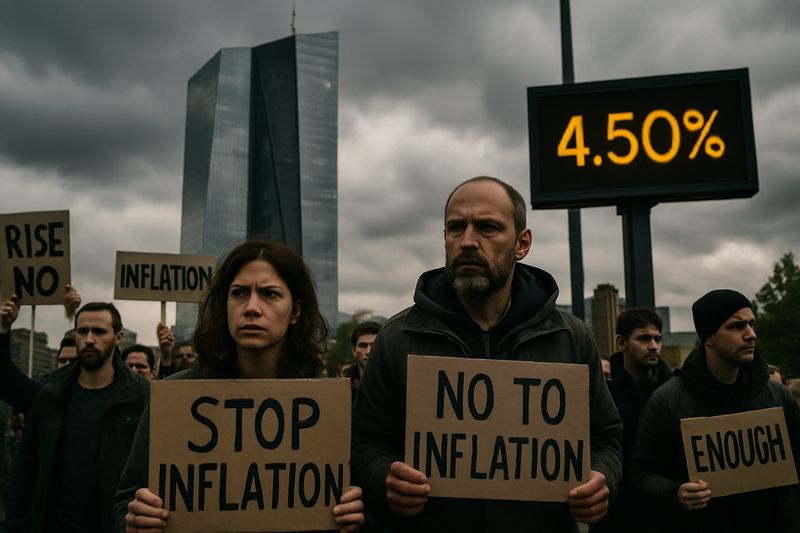
If the markets felt like they were being held together with duct tape and optimism before Tuesday, the ECB just took a pair of scissors to both. The European Central Bank hiked rates citing Iran-war-driven inflation, landing the move on top of a market already dealing with 10-year Treasury yields at 4.97%, a VIX that jumped nearly 8% on Monday alone, and a Strait of Hormuz where shipping traffic has, per Reuters, fallen to literal single digits. Single. Digits.
The headline risk is stacking up faster than a bad beat at poker night. The Congressional Budget Office now puts the Iran war cost at $38 billion, rising at roughly $3 billion per month. Saudi Arabia has shut down a key oil pipeline. Houthis are tightening their grip on Red Sea shipping lanes. AWS cannot restore access to its Bahrain and UAE cloud zones after war damage. And Treasury Secretary Bessent is dangling a surprise bank sanction announcement for Monday, which is the kind of news that makes compliance officers sweat through their dress shirts.
On social media, the mood is exactly what you would expect. YouTube channels tracking the macro chaos, including one that had diesel pegged at a record $6.23 per gallon and oil pushing toward $106 per barrel, are framing this as a full-blown fuel crisis with no near-term exit. The Fed rate hike probability is sitting at over 90% for Wednesday's meeting, per money markets, and CNBC's Fed Survey shows 76% of respondents expect a hike, up sharply from last month. Meanwhile, the Council of Economic Advisers chair went on air to argue the Fed should stand down, saying inflation is already trending in the right direction across CPI, core CPI, PCE, and core PCE. So yes, the government is publicly debating itself on live television. Totally fine.
The ECB's move is the piece that changes the narrative globally. When Europe hikes into a geopolitical shock rather than waiting it out, it signals that central banks are more scared of embedded inflation than of crashing growth. That is a brutal trade-off for equity markets already sitting on a five-session losing streak for the S&P 500 out of the last seven. The Nasdaq dropped 0.78% on September 15, leading the selloff, which tells you risk appetite in tech is evaporating fast.
The bull case here is thin but not invisible: a diplomatic breakthrough from Bessent's planned weekend meeting with Chinese officials could relieve some pressure, and LNG demand from China, India, and Pakistan is expected to rebound once the war ends, which at least implies a recovery trade waiting in the wings. But right now, the market is not trading on what comes after. It is trading on what is happening today, and what is happening today is that the ECB just confirmed inflation is a global problem, not a regional one.
When the central bank that covers a continent of 450 million people decides war-driven inflation is more dangerous than a slowdown, the Fed's Wednesday decision stops being a surprise and starts being a formality.
BullApe's AI grades every pick against the S&P 500 - wins and misses published. See the track record →