Druckenmiller vs. Bessent: The $4B Bond Buyback Fight Explained
The man who broke the Bank of England says Washington is about to learn the same painful lesson
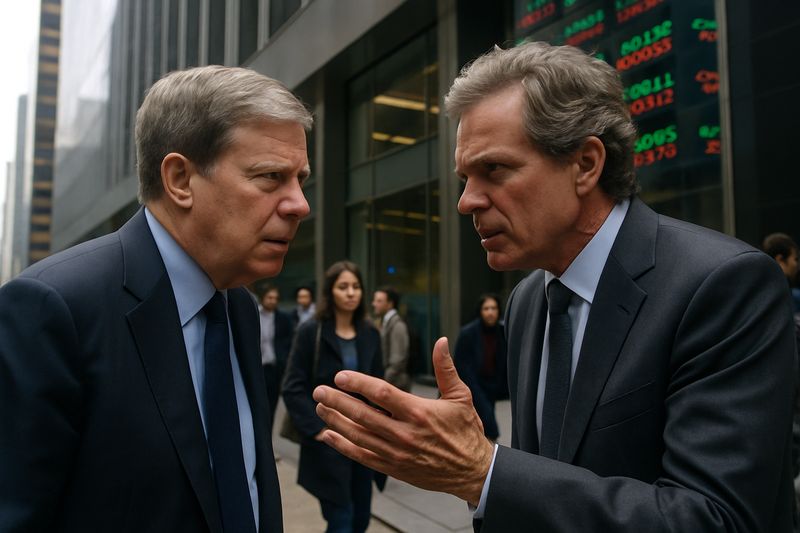
Stanley Druckenmiller does not write Wall Street Journal op-eds for fun. The legendary macro investor, who famously made $1 billion in a single day shorting the British pound alongside George Soros in 1992, published a scorching critique of Treasury Secretary Scott Bessent's decision to double the long-term bond buyback program from $2 billion to $4 billion. His words, per Bloomberg's coverage: unwarranted, hypocritical, and hazardous to the bedrock of global financial markets. Not exactly a Yelp review you want for your monetary policy.
The argument is elegantly brutal. Druckenmiller says governments that try to defend prices against market fundamentals always lose, and he would know, because he was on the winning side of the most famous example in modern history. His concern is that once the bond market believes Treasury is actively capping yields, every single uptick in the 30-year yield (currently sitting at a very uncomfortable 5.20%) becomes a test of official resolve. You're not managing liquidity anymore. You're managing a narrative, and narratives are expensive to maintain.
Bloomberg Surveillance flagged the subplot that makes this even juicier: Fed Chair candidate Kevin Warsh is scheduled to speak Friday at Jackson Hole, and markets are parsing every syllable for signals about long-term rate stability. There's apparently a lesser-known third mandate buried in the 1978 Federal Reserve Act covering long-term rate stability, and suddenly everyone has opinions about a 48-year-old law. Graham Stephan's video on YouTube took the doom angle even further, drawing comparisons to 1940s yield curve control and flagging that the CAPE ratio now mirrors dot-com bubble peaks with the Buffett Indicator above 230%.
Here's the bull case for Bessent's move: with $40 trillion-plus in federal debt and a 6% budget deficit, someone has to buy the long end. Former Rep. Kevin Brady weighed in on Bloomberg noting that Congress will eventually have to act on debt, but eventually is doing a lot of work in that sentence. AI-related corporate debt issuance is also flooding the market and competing directly with Treasuries for buyer attention, which is not exactly a tailwind for yield suppression.
The bear case is Druckenmiller's case, and it rhymes uncomfortably with history. If Treasury blinks every time the 30-year spikes, the market learns to front-run the intervention. That is not price stability. That is a one-way trade at taxpayer expense, and the guy who literally made a billion dollars exploiting exactly that dynamic is waving a very large red flag.
The real tell will be Friday's Warsh speech. If he signals any coordination between Fed and Treasury on long-end yields, buckle up, because the bond vigilantes have already been briefed by the guy who trained them.
BullApe's AI grades every pick against the S&P 500 - wins and misses published. See the track record →