Boeing ($BA) Gets Hit by FAA Delay and 737 Max Software Bug
A software error that can kill automated navigation on landing, plus a $359M NASA Starliner lifeline that won't help until 2028
Ticker Ratings
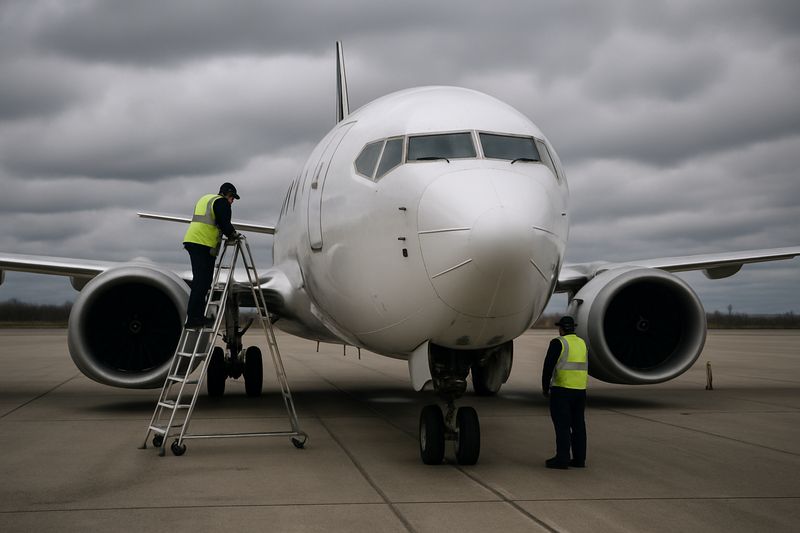
$BA dropped more than 6% this week after admitting to a software error in its 737 Max jets that can cause the automated navigation system to fail during certain landing situations. United Airlines and Southwest Airlines both told Boeing they do not want the new 737 Max jets they ordered if the software problems are not fixed. German air officials piled on by opening an investigation into a Boeing 787. It's a lot.
Meanwhile, on the space side of Boeing's disaster portfolio, NASA is throwing the company a $359 million lifeline to keep the Starliner spacecraft program alive. The catch: crewed flights are now pushed to 2028, with only uncrewed cargo missions possibly starting in December. Seeking Alpha's quant model has Boeing rated as a hold, which, given the circumstances, is doing some heavy lifting as a euphemism.
The timing could not be worse. The broader market is already under pressure, with the 10-year Treasury yield sitting at 5.26% and the Dow closing the week at 50,906, down nearly 1% on September 30th alone. When rates are this high, companies carrying real operational risk get punished faster and harder. Boeing is carrying a lot of operational risk right now.
Here is the bull case, because it deserves a fair hearing: Boeing still has a massive backlog, the 737 Max remains one of the most in-demand narrow-body jets on the planet, and a software fix is theoretically faster to deploy than a structural redesign. If the FAA clears the patch quickly and airlines stay in the order queue, this could look like a buying opportunity in six months.
The bear case is harder to dismiss. This is not Boeing's first software rodeo on the 737 Max. Trust with airlines and regulators takes years to rebuild and seconds to lose. The Starliner saga signals the company's execution problems are not limited to commercial aviation. And with rates this elevated, the market has no patience for companies that keep handing out negative surprises.
SpaceX launched Starship into orbit for the first time this week, confirming all 33 Super Heavy booster engines were operational at liftoff. That is Boeing's competitor in space, looking increasingly like the adult in the room.