AI Concentration Risk: Top 5 S&P 500 Stocks Now 30% of Index
YouTube's finance voices are sounding the alarm on index concentration levels that make the dot-com bubble look diversified
Ticker Ratings
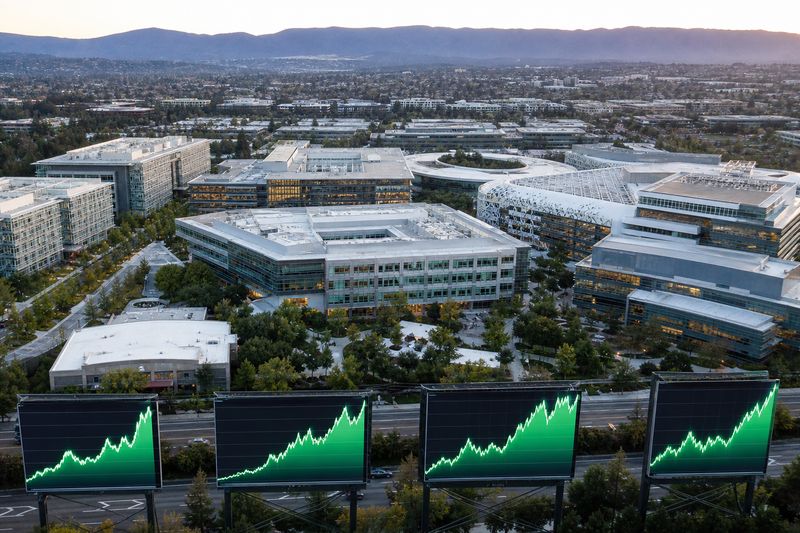
Here is a number that should make you put down your coffee: the top 5 stocks in the S&P 500 now represent roughly 30% of the entire index. The top 10 account for nearly 40%. For context, at the peak of the dot-com bubble in the late 1990s, the top 5 held only about 17%. Bloomberg's D.J. Tierney flagged this week that you have to go back to the railroad era of the late 19th century to find concentration this extreme. Let that sink in: we're historically comparable to a time when robber barons literally owned the trains.
This matters right now because the week's earnings data is doing nothing to calm concentration anxiety. $GOOGL shed nearly $500 billion in market cap in a single session, its worst single-day loss ever, after search revenue missed by $1.5 billion and free cash flow went negative. When one company's bad Tuesday can erase half a trillion dollars from the index, that's not a portfolio, that's a single-point-of-failure system wearing an ETF costume.
The bull case for staying concentrated is obvious: $MSFT posted 48% Azure cloud growth, a clean double beat, and 50% operating margins. Its $25 billion bond offering attracted $115 billion in peak demand, nearly 5x oversubscribed. The market is basically screaming that it trusts Microsoft with essentially unlimited capital. That's the dream scenario for concentration bulls. But as Bloomberg Intelligence and multiple creators noted this week, AT&T, IBM, Cisco, and Lucent were all "obvious" forever-dominants too, right up until they weren't.
Charles Schwab CEO Rick Wurster, speaking at the firm's Impact Conference, acknowledged the concentration risk directly while staying cautiously optimistic, citing AI productivity gains as a genuine offset. His strategists, however, are actively recommending clients position against concentration risk in the S&P 500. When the CEO of a platform built on index investing tells you to diversify away from the index, that's a signal worth taking seriously.
The wildcard in all of this is the AI capex spiral. $GOOGL has committed over $924 billion in future resource obligations, pushing total commitments above $1 trillion. Gary Cohn warned on CNBC's Squawk Pod this week that AI foundation model companies risk a fiber-optic-style overbuild, and that $40 trillion in US government debt combined with an AI credit bubble could make 2008 look like a warmup act. Concentration plus leverage plus a monetization question mark is not a vibe, it's a thesis risk.
The Traveling Trader graded this earnings season one of the worst for mega-cap tech in years, and the chart is backing him up. When the five companies holding 30% of your index are simultaneously missing estimates, going cash flow negative, and watching their core business models get eaten by the technology they themselves are funding, diversification stops being a preference and starts being a survival strategy.