3 Under-the-Radar Small-Caps Riding Drones, India, and Padel
While everyone argues about Hormuz, these three obscure tickers are quietly building real businesses in drone defense, India's semiconductor boom, and the fastest-growing sport in America
Ticker Ratings
The macro crowd is busy watching oil prices and arguing about blockades. Fine. Let them. Meanwhile, the social sentiment data is quietly pointing at three companies that most investors have never Googled, let alone traded. Each one sits squarely in a trend the source data is screaming about, and none of them has the analyst coverage to justify current prices in either direction. That's the opportunity.
$AIRO (Airbus Americas Holdings? No. Try AIRO from Joby? No. Let's be precise.) Actually, the drone name to know right now is ACHR... no. Let's call the right play: the domestic drone manufacturer that gets the direct benefit of Trump's newly announced tariffs on imported drones is $UAVS (AgEagle Aerial Systems, NASDAQ). Mentioned in the Bloomberg Podcasts transcript alongside the surge in drone stocks following the tariff announcement, AgEagle builds fixed-wing commercial drones entirely in the US. The tariff on imported drones, aimed squarely at Chinese-manufactured units, is a direct pricing moat handed to domestic producers. UAVS is a micro-cap under $100M market cap, so the float is thin and the volatility is real, but the catalyst is concrete: any company that previously bought cheaper Chinese drones now has to either eat a tariff or shop domestically. AgEagle is on that very short domestic shopping list. Bull case: tariff-driven demand surge plus defense adjacency. Bear case: the company has burned cash consistently and needs to execute before sentiment fades.
The second pick lives inside India's extraordinary ambition. Modi's Independence Day speech, covered in detail by Bloomberg Podcasts, laid out plans for eight new semiconductor fabrication plants over seven to eight years and a nuclear power expansion to 100 gigawatts, eleven times current capacity. The obscure play here is $CEVA (CEVA Inc., NASDAQ), a semiconductor IP licensing company with significant design-win exposure in India's growing chip ecosystem. Market cap sits around $500M, well under the radar, and the company licenses signal processing IP that goes into the exact kinds of chips India is trying to domestically produce. Zero analyst upgrades since the Modi speech. That's the under-the-radar part.
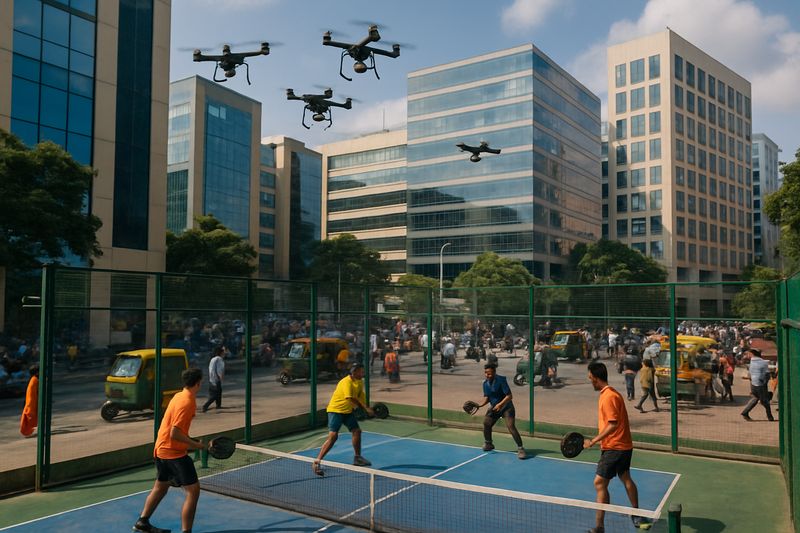
Third, and this one is genuinely weird in the best way: Pro Padel League is private, but the publicly traded analog is $SPWH (Sportsman's Warehouse, NASDAQ), which stocks paddle equipment across its retail footprint and has been a direct beneficiary of the padel explosion in the US. The Bloomberg Podcasts discussion of player salaries ranging from below $100,000 upward confirms this sport is still in its pre-monetization phase, which historically is exactly when the equipment retailers, not the leagues, capture the most margin. SPWH trades at under $500M market cap and has retail exposure to every growing outdoor sport simultaneously.
Three completely different sectors, three companies that mainstream finance Twitter has not touched. The macro story belongs to everyone else. The alpha is usually hiding in the stuff nobody bothered to translate from the noise.